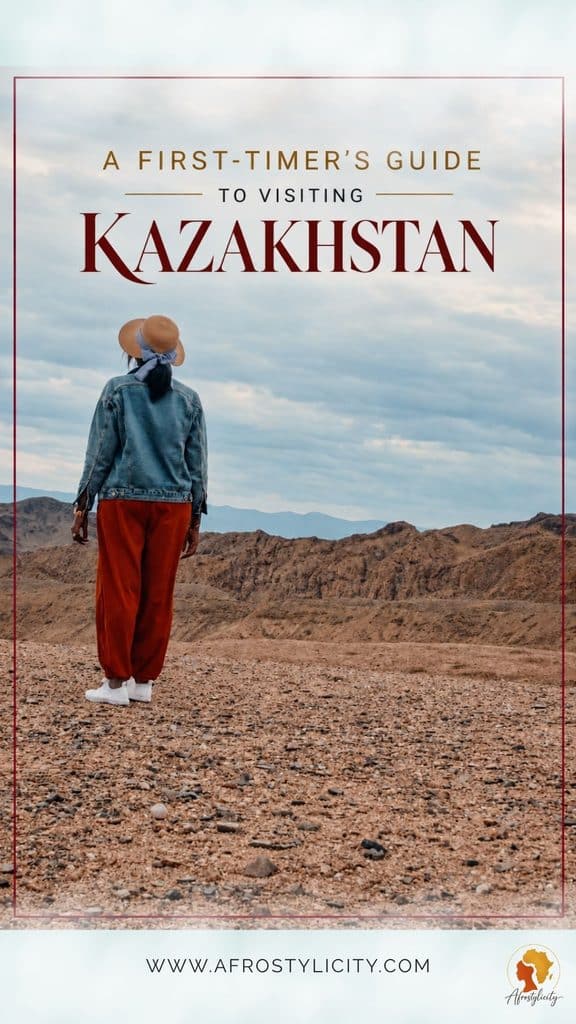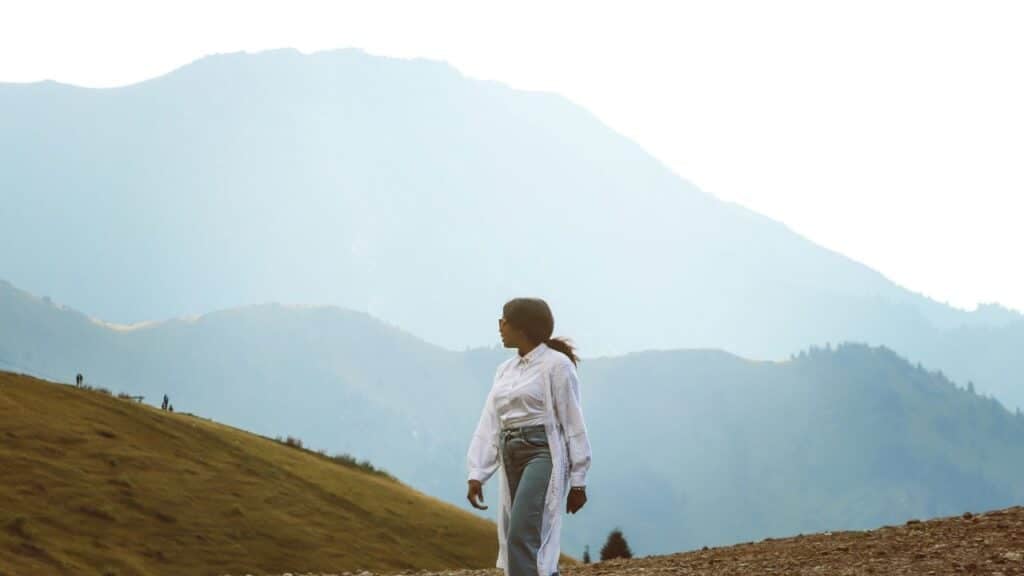
Kazakhstan is one of the world’s most underrated travel destinations. You may have heard the name in a geography class or seen it mentioned in a viral movie reference. But many travelers still have no idea what to expect. After visiting Kazakhstan for the first time, I wish I’d had a ton of information beforehand. This travel guide covers everything you need to know before you visit. It is designed to help you spend less time solving avoidable problems and more time experiencing the best of Kazakhstan.
This post may contain affiliate links. We may earn a small commission, at no cost to you, when you make a purchase through the links. Read our complete disclaimer here, and Amazon Affiliate disclosure here.
Introduction to Kazakhstan
| Essential Information | Quick Reference |
|---|---|
| Location | Central Asia, between Russia to the north, China to the east, and Kyrgyzstan, Uzbekistan, and Turkmenistan to the south. The Caspian Sea borders the country to the southwest. |
| Geography | The world’s largest landlocked country and the largest country in Central Asia. It includes steppe, desert, mountains, canyons, forests, lakes, and Caspian Sea coastline. |
| Capital City | Astana |
| Largest City | Almaty |
| Main Tourist Gateways | Almaty International Airport and Astana International Airport |
| Country Size | Approximately 2.7 million square kilometers; distances between destinations can be very long. |
| Currency | Kazakhstani tenge — KZT / ₸ |
| Cultural Diversity | Kazakhs are the majority ethnic group, while the country is also home to more than 100 ethnic communities, including Russians, Uzbeks, Ukrainians, and Uyghurs. |
| Time Zone | Kazakhstan uses UTC+5 nationwide. Check local time before booking transportation or scheduling tours. |
| Power | Type C and Type F plugs; 220V, 50Hz. |
| Country Calling Code | +7 |
| Climate | Continental climate with hot summers, cold winters, and significant regional differences. |
| Best General Travel Seasons | Late spring and early autumn are often comfortable for city sightseeing and outdoor travel, but the best season depends on your region and activities. |
| Main Tourist Bases | Almaty for mountains, food, culture, and nature; Astana for modern architecture, museums, and city attractions. |
| Emergency Number | 112 for general emergencies. |
| Visa Requirements | Entry requirements depend on your nationality, passport, purpose of travel, and length of stay. Verify current rules before departure. |
| Is It Worth Traveling To? | Read the Is Kazakhstan Worth Visiting? guide |
| Suggested Route? | Read the 5-Day Kazakhstan Itinerary guide. |
| What to Know About Almaty? | Read the Almaty Travel Tips guide. |
| What to Pack for Kazakhstan? | Read the Kazakhstan Packing List guide. |
| What to Wear in Kazakhstan? | Read the Kazakhstan Outfit Ideas guide. |
Where Is Kazakhstan?
Kazakhstan is located in Central Asia, between Europe and Asia. It shares borders with Russia, China, Kyrgyzstan, Uzbekistan, and Turkmenistan. It also has a coastline along the Caspian Sea.
The country includes several distinct geographic regions:
- Southeastern Kazakhstan: Home to the Almaty region, the Tian Shan Mountains, Charyn Canyon, Kolsai Lakes, and Kaindy Lake.
- Northern Kazakhstan: Includes Astana, the northern steppe, and areas such as Burabay National Park.
- Southern Kazakhstan: Known for Turkistan, historic monuments, and Silk Road heritage.
- Western Kazakhstan: Includes the Caspian region and the dramatic landscapes of Mangystau.
What Kind of Country Is Kazakhstan?
Kazakhstan is the world’s ninth-largest country by land area, covering about 1.04 million square miles (2.7 million square kilometers).
Its geography includes grasslands, deserts, alpine lakes, mountain ranges, canyons, forests, historic cities, and a coastline along the Caspian Sea.
The People of Kazakhstan
Kazakhstan is a highly multiethnic country, with Kazakhs forming a clear majority.
Russians are the second-largest community, followed by Uzbeks, Ukrainians, Uyghurs, Germans, Tatars, Koreans, Azerbaijanis, Turks, Dungans, and many others.
FYI: Kazakh refers to the ethnic group, while Kazakhstani means any citizen of Kazakhstan, regardless of ethnicity.
- Kazakhs are the country’s Indigenous Turkic people, and their language, nomadic heritage, food, music, and hospitality traditions strongly influence national culture.
- The Russian language also has a visible cultural and linguistic presence, particularly in northern and eastern Kazakhstan. It is widely used in daily life alongside Kazakh.
- Uzbek communities are especially significant in the south, while Uyghur communities are concentrated in the southeast, including around Almaty.
- Altogether, Kazakhstan is home to more than 100 ethnic communities.
Is Kazakhstan Worth Visiting?
Yes, Kazakhstan is worth visiting if you enjoy destinations that combine natural beauty, rich history, magnificent architecture, and cultural discovery.
Within one trip, you can experience busy city streets, snow-capped mountains, desert scenery, alpine lakes, deep canyons, vast grasslands, and so much more.
Read more in the Is Kazakhstan Worth Visiting travel guide.
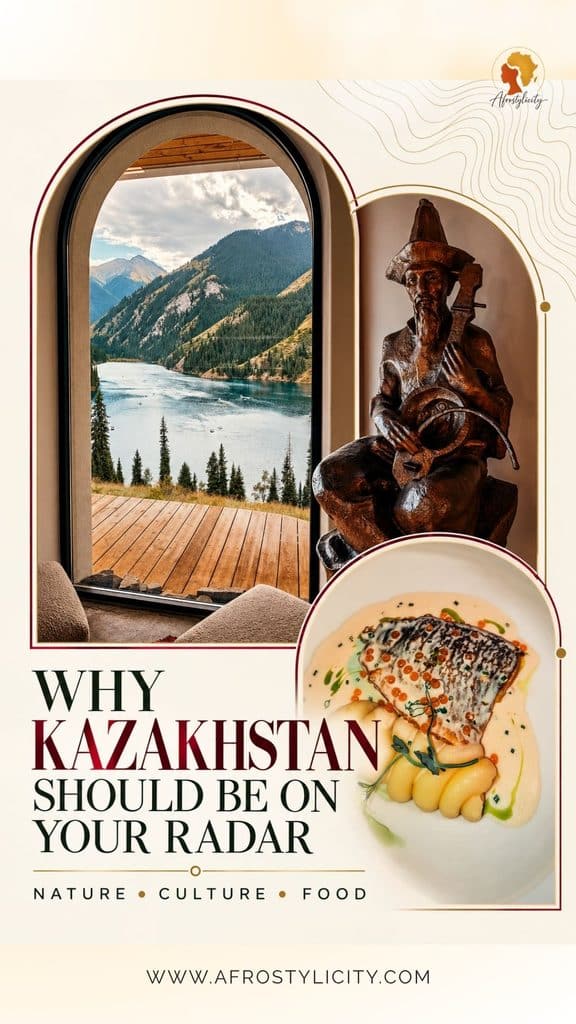
Requirements for Visiting Kazakhstan: Visas, Entry, and Arrival
Visiting Kazakhstan may be easier than you probably think.
Kazakhstan is relatively straightforward to visit for many travelers. However, entry rules depend on your passport, trip length, and purpose of travel. Always confirm the current requirements through an official Kazakh government source and your home country’s travel advisory beforehand.
U.S. citizens can generally enter visa-free for up to 30 days per visit, with a maximum cumulative stay of 90 days within six months.
| Topic | What You Should Know |
|---|---|
| Visa-free travel | Citizens of the United States and many other countries can visit Kazakhstan visa-free for short tourist stays. Eligibility, permitted length of stay, and conditions depend on the passport you hold. |
| U.S. passport holders | U.S. citizens can generally visit visa-free for up to 30 days at a time for tourism or business. They cannot stay longer than 90 days total in a six-month period without the appropriate visa or authorization. Visa-free entry excludes employment and missionary work. |
| Visa Requirements | Some nationalities must apply for a visa before travel. Kazakhstan offers an e-visa process for eligible travelers, but the official process requires an approved invitation from a Kazakh host or inviting party; travelers must print the e-visa and enter through an eligible international airport. |
| Passport | Bring a valid passport in good condition. Passport-validity requirements vary by nationality and visa category, so confirm the rule that applies to your passport before booking nonrefundable travel. |
| Accommodation | Keep the address and booking confirmation for your hotel, hostel, rental, or host readily available. Border officers may ask where you plan to stay. |
| Arrival Notification | Kazakhstan’s receiving party (e.g. a hotel, landlord, tour company, employer, school, or private host) is generally responsible for notifying migration authorities of a foreign visitor’s arrival within three working days. Hotels and other registered accommodations normally handle this electronically, but if you are staying in a private home or informal rental ask the host to confirm it has been completed. |
| Onward Travel | Carry return or onward flight details in case they are requested at check-in or immigration. This is especially sensible for visa-free travelers and those entering on an e-visa. |
| Travel Insurance | Travel insurance is strongly recommended. Save your policy number, emergency-assistance contact details, and coverage documents on your phone and in secure cloud storage. |
| Useful Documents | Keep digital and paper copies of your passport, visa or e-visa if applicable, accommodation confirmations, travel insurance, flight details, tour bookings, and domestic transport reservations. |
| Main Airports | Search flights using Almaty International Airport (ALA) and Astana International Airport (NQZ). Astana was previously called Nur-Sultan, so older articles, maps, and flight information may use the former city name. |
| Flight Connections | Travelers commonly connect through hubs such as Istanbul, Dubai, Frankfurt, Doha, and several Asian cities. Available routes vary by airline, season, and departure city. |
| Land Borders and Longer Trips | Check requirements especially carefully if you plan to cross a land border, stay longer than 30 days, travel with specialized filming equipment, or carry large amounts of cash. Rules and procedures can differ from a standard short airport arrival. |
| Potential ETA Changes | Kazakhstan reportedly began piloting a digital travel-authorization system, called QazETA, for some visa-free visitors in September 2026. Because implementation details may change, confirm whether your passport requires an Electronic Travel Authorization before departure. |
Before You Book Your Visit to Kazakhstan
Use this simple checklist before finalizing your trip:
- Confirm whether your passport qualifies for visa-free entry or requires a visa.
- Check the maximum permitted stay and any cumulative-stay limit.
- Verify passport-validity rules for your nationality and travel purpose.
- Confirm your accommodation provider or host will complete the required arrival notification.
- Keep your passport, accommodation address, and onward-travel details accessible during your journey.
- Recheck the latest rules shortly before departure, since visa, entry, and digital travel-authorization requirements can change.
Best Time to Visit Kazakhstan
The best time to visit Kazakhstan depends on your itinerary and travel style. For most first-time visitors, late May through June and September are the best times to visit.
Best Time to Visit Kazakhstan by Season
Kazakhstan has a strongly continental climate, so conditions can vary dramatically between Astana’s windy steppe, the mountains near Almaty city, and the deserts of the south and west.
| Season | What to Expect | Best For | Keep In Mind |
|---|---|---|---|
| Spring | April through May has milder weather, greener scenery, and blooming landscapes in many regions. | City breaks, cultural sightseeing, photography, southern Kazakhstan, and lower-altitude nature trips. | Mountain trails, high passes, and remote roads may still be snowy or muddy, especially early in the season. Check local conditions before planning hikes. |
| Summer | June through August is the main season for mountain travel, with the most reliable access to hiking trails, alpine lakes, and highland destinations. | Hiking, camping, alpine lakes, road trips, and outdoor excursions near Almaty. | Lowland, southern, and desert areas can become intensely hot, while mountain weather remains cooler but can change quickly. Hotels and tours may be busier, particularly in July and August. |
| Fall (Autumn) | September through early October usually brings cooler, comfortable sightseeing weather and golden foliage, particularly around Almaty and northern Kazakhstan. | Photography, city sightseeing, canyons, cultural travel, and quieter mountain-and-lake trips. | Temperatures fall quickly later in the season, and high-altitude access may become less predictable by October. |
| Winter | December through February brings snow and dramatic winter scenery, but also severe cold (particularly in Astana and northern Kazakhstan). | Skiing, snowboarding and other winter sports. | Temperatures can fall below −22 ∘F ( −30°C) in the north, with wind making it feel colder. |
Best Time to Visit Kazakhstan by Activity
As a first-time visitor to Kazakhstan, you may also want to consider the activities you plan to do.
| Travel Priority | Best Time To Go | Why |
|---|---|---|
| First trip to Kazakhstan | Late May to June or September | These months offer a practical mix of pleasant city weather, mountain access, and manageable temperatures across many regions. |
| Almaty, Astana, and Turkistan | April to June and September to October | Spring and autumn are typically more comfortable for walking tours, museums, markets, and outdoor sightseeing than the hottest or coldest months. |
| Hiking and Alpine Lakes | June to early September | This is generally the most reliable window for hiking and visiting mountain destinations such as Kolsai Lakes and Lake Kaindy, when trails and roads are more likely to be accessible. |
| Charyn Canyon and Desert Landscapes | April to May or September to October | These shoulder seasons are usually more comfortable than midsummer, when exposed areas such as Charyn Canyon can be extremely hot. |
| Skiing near Almaty | December to February | Winter is the prime period for skiing and snowboarding at Shymbulak, though snow conditions and resort operations should always be checked before booking. |
| Fewer Crowds and Possible Lower Prices | April, May, late September, or October | Shoulder-season travel can mean a quieter experience and, in some places, better hotel availability; the trade-off is more variable weather and less reliable access to high-altitude areas. |
Best Time for a First-Time Visit to Kazakhstan
A Kazakhstan itinerary can cross very different climate zones. Summer is often ideal for the Tian Shan Mountains, Kolsai Lakes, and Lake Kaindy, but it can be uncomfortably hot in Mangystau, Turkistan, and exposed canyon or desert landscapes.
Winter, meanwhile, can be a memorable time for winter sports like skiing near Almaty but is far less practical for broad outdoor itineraries in the north and remote mountain regions.
For a first visit, I would avoid treating one month as universally “best.” Instead, choose dates around your priority: late spring or September for a balanced multi-stop itinerary, summer for high-altitude hiking trails, and winter for snow sports.
Where to Go When Visiting Kazakhstan for the First Time
Kazakhstan is enormous, so a regional plan is essential. If you are visiting Kazakhstan for the first time, focus on one or two areas rather than trying to cross the country too quickly.
Almaty is the best place for a city-and-nature itinerary. It has tree-lined streets, lively markets, modern restaurants, museums, and easy access to the mountains.
Astana, the country’s capital, is known for futuristic buildings, monumental public spaces, and bold contemporary architecture.
Turkistan and Mangystau each offer a distinctly different side of the country.
| Destination | Why Visit | Best Experiences | Suggested Itinerary | Planning Notes |
|---|---|---|---|---|
| Almaty | Kazakhstan’s most inviting city combines cafés, restaurants, museums, markets, leafy streets, and mountain views. | Panfilov Park, Ascension Cathedral, Green Bazaar, Kok Tobe, Arasan Baths, the Central State Museum, Shymbulak, and nearby Ile-Alatau National Park. | 3- 5 days | The best all-around base for first-time visitors and mountain day trips. It also has the country’s most convenient access to Big Almaty Lake, Charyn Canyon, Kolsai Lakes, and Lake Kaindy. |
| Big Almaty Lake | A turquoise alpine reservoir in the Tian Shan Mountains, around 28 km south of Almaty. | Mountain scenery, photography, and a scenic high-altitude escape from the city. | Day trip | Access is controlled and can change because the lake is in a border-zone area. Bring your original passport, check current road and walking access, and note that swimming is prohibited. |
| Charyn Canyon | One of Kazakhstan’s most recognizable natural landmarks, known for red rock walls and the eroded formations of the Valley of Castles. | Canyon walks, landscape photography, and dramatic desert-like scenery. | Day trip or overnight | A long day trip from Almaty. Expect strong sun, little shade, uneven walking surfaces, and a full day of driving; bring water, sun protection, and sturdy shoes. |
| Kolsai Lakes and Lake Kaindy | Kolsai offers forest-ringed alpine lakes, while Lake Kaindy is famous for the submerged spruce trunks rising from its blue-green water. | Hiking, lake views, photography, and mountain scenery. | 1-2 nights | Best treated as a two- or three-day trip with Charyn Canyon rather than a rushed day tour. The final road to Kaindy is rough and usually requires a 4×4 or local UAZ transfer; carry your original passport for the checkpoint near Saty. |
| Astana | The capital delivers a complete contrast to Almaty: modern, planned, spacious, and defined by bold architecture and monumental public spaces. | Bayterek Tower, the National Museum, Palace of Peace and Reconciliation, Khan Shatyr, the Grand Mosque, EXPO area, and the Ishim River waterfront. | 2-3 days | Best for architecture, museums, and a modern urban experience. It can be intensely cold and windy in winter, so plan layers and indoor attractions accordingly. |
| Turkistan | A major center of Islamic, Silk Road, and Kazakh spiritual heritage in southern Kazakhstan. | The UNESCO-listed Mausoleum of Khoja Ahmed Yasawi, museums, historic sites, and traditional culture. | 1-2 days | A strong addition for travelers interested in history and architecture. Dress respectfully at religious sites and confirm indoor photography rules before visiting. |
| Mangystau | Western Kazakhstan’s most surreal region. White cliffs, canyons, desert plateaus, underground mosques, and Caspian Sea coastlines create extraordinary scenery. | Boszhira Valley, Torysh’s stone spheres, Beket-Ata Underground Mosque, Ustyurt Plateau, and Aktau’s seafront. | 3- 5 days | Fly into Aktau, then book a reliable driver or organized tour. Distances are long, services are limited outside settlements, and many iconic sites are far apart on rough desert roads. Spring and autumn are generally the most comfortable seasons. |
Suggested Itinerary When Visiting Kazakhstan for the First Time
Kazakhstan is not a small country you can explore quickly. Long distances, changing weather, and limited transportation in remote areas mean that a realistic itinerary is essential.
For a first trip, Almaty plus its surrounding nature is the strongest starting point. You can spend several days enjoying the city, then add Big Almaty Lake and Shymbulak as shorter mountain outings.
Reserve at least two days for Charyn Canyon, Kolsai Lakes, and Lake Kaindy if you want to experience them without turning the journey into an exhausting transit day.
Add Astana if futuristic architecture, museums, and a second major city appeal to you.
Choose Turkistan for Silk Road and religious heritage, or prioritize Mangystau if your main goal is remote desert scenery, photography, and an off-the-beaten-path adventure.
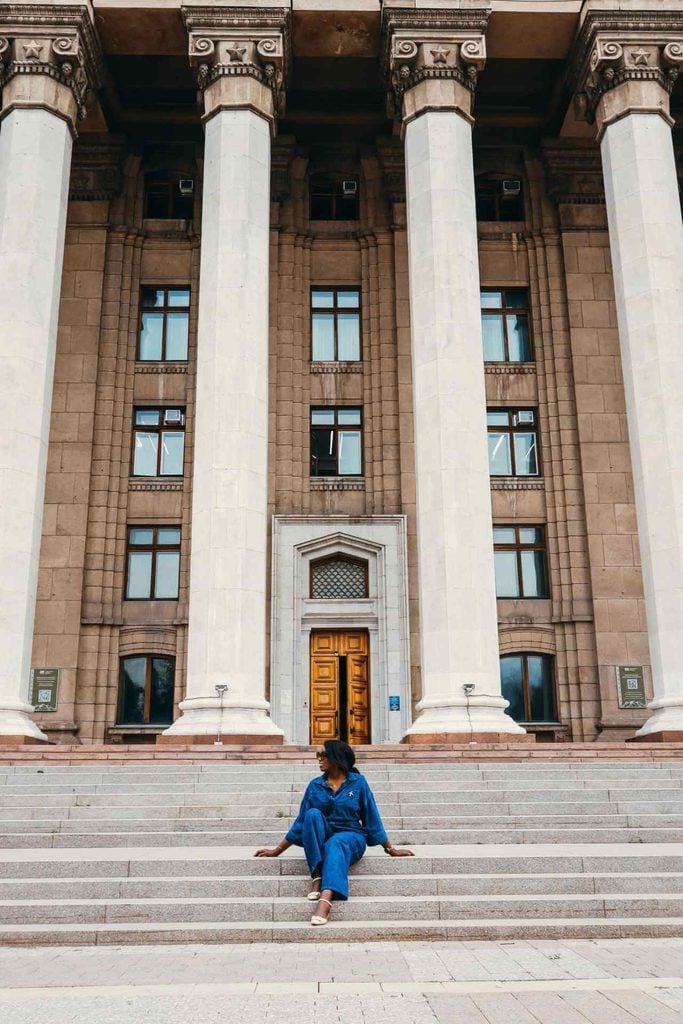
What to Pack When You Visit Kazakhstan
| Season | Typical Conditions | What to Pack |
|---|---|---|
| Summer | Hot in many lowland and southern areas. Cooler evenings and much lower temperatures in the mountains. | Lightweight cotton, linen or moisture-wicking clothing; breathable trousers or dresses; sun protection; comfortable shoes; a light sweater or jacket. |
| Spring | Changeable weather, with cool mornings, warmer afternoons, and possible rain or wind. | Layered clothing; light fleece or sweater; waterproof or wind-resistant jacket; comfortable walking shoes; compact umbrella. |
| Fall (Autumn) | Mild to cool conditions that can become colder later in the season, particularly in northern and mountain areas. | Long trousers; long-sleeved tops; fleece or sweater; waterproof/windproof jacket; closed-toe shoes; warmer accessories for late fall/autumn. |
| Winter | Severe cold is possible, especially in Astana, northern Kazakhstan, and exposed steppe regions. Some cold spells can fall below 22°F (-30°C) | Long insulated coat or parka; thermal base layers; insulated waterproof boots; warm socks; gloves or mittens; scarf; hat; windproof layers. |
Kazakhstan has a strongly continental climate, so packing for the weather usually matters more than following a strict everyday dress code.
Conditions can vary significantly between cities, southern and northern regions, and mountain or desert destinations, so pack intentionally.
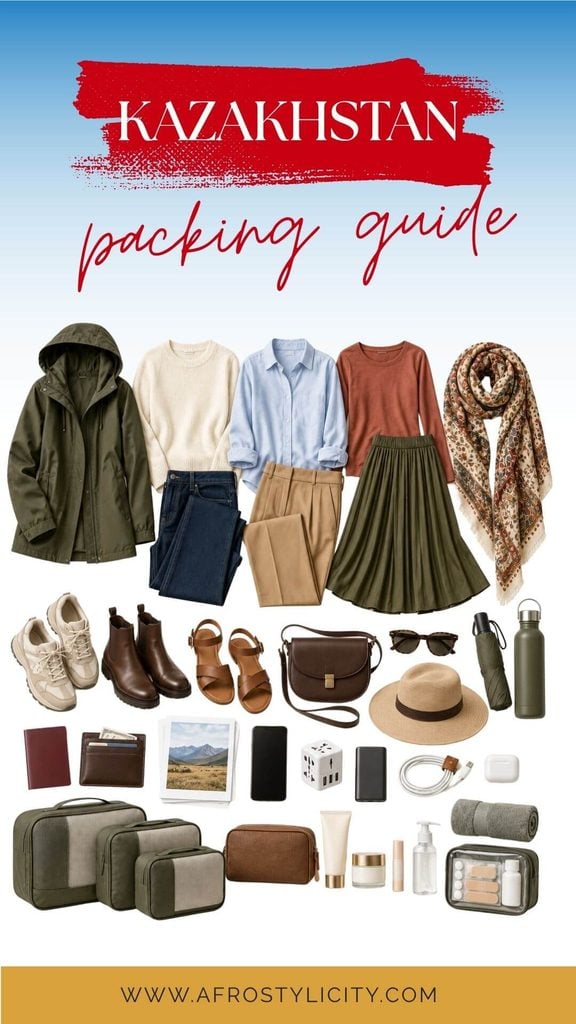
Check out the What to Pack for Kazakhstan travel guide for a detailed breakdown.

What to Wear When Visiting Kazakhstan
When visiting Kazakhstan, understanding the local dress codes and weather conditions is crucial to ensure a comfortable and respectful experience
Kazakhstan is a secular and diverse country, so you do not need to follow a strict everyday dress code. The most important considerations are the weather, the activity you are doing, and whether you are visiting a religious or traditional setting. When in doubt, choose practical, modest layers and follow local guidance.
| Where You Are | What Works Well |
|---|---|
| Almaty, Astana, and Major Cities | Contemporary casual clothing is normal for everyday sightseeing, cafés, restaurants, malls, and nightlife. Dresses, jeans, trousers, T-shirts, sleeveless tops, and season-appropriate shorts are commonly worn. Pack layers because temperatures can change quickly, especially near the mountains or in the evening. |
| Smaller Towns and Rural Areas | There is no universal rural dress code, but practical, less revealing clothing can help you feel comfortable and show respect in more traditional settings. Longer shorts, trousers, midi skirts or dresses, and tops with more coverage are versatile choices, especially for home visits or local community settings. |
| Mosques and Religious Mausoleums | Dress modestly and follow the rules at the specific site. Cover your shoulders and knees; women should carry a scarf because hair covering may be requested. Men should wear long trousers rather than shorts and avoid sleeveless tops. Loose, non-transparent clothing is a safe choice. Remove shoes only when instructed. |
| Churches and Other Religious Sites | Wear respectful, modest clothing, including covered shoulders and knees when possible. Follow the site’s posted rules and staff guidance. Head-covering and shoe-removal requirements vary and should not be assumed. |
| Pools, Resort Spas, and Designated Swimming Areas | A regular swimsuit is appropriate. Bring a cover-up for walking through hotel public spaces, restaurants, transport, streets, or areas away from the pool or shore. |
| Mountain, Canyon, and Outdoor Excursions | Prioritize weather-ready clothing over fashion: sturdy sneakers or hiking shoes, layered tops, a windproof or waterproof jacket, sun protection, and a warmer layer for higher elevations. |
Check out the What to Wear in Kazakhstan travel guide for a detailed breakdown.

How to Get Around When You Visit Kazakhstan
Kazakhstan is enormous, so transportation planning is an important part of any itinerary.
Domestic flights are often the best way to connect distant cities. For example, flying between Almaty and Astana can save considerable time compared with an overland journey.
Trains work well for slower, budget-friendly travel between major cities.
Within Almaty and Astana, ride-hailing apps are generally the simplest way to move around.
For remote attractions, a guided tour or private driver is often the most practical choice.
| Transport Option | Best For | What To Know |
|---|---|---|
| Domestic Flights | Connecting distant regions, including Almaty, Astana, Shymkent, Aktau, and western Kazakhstan. | Flying saves substantial time on a short itinerary. Air Astana, FlyArystan, and SCAT operate major domestic routes; book early for better fares and check baggage limits carefully, especially when traveling with camera equipment. |
| Trains | Budget travel, overnight journeys, and travelers who enjoy the overland experience. | Kazakhstan has an extensive rail network with seats, couchettes, and sleeping compartments. Faster Talgo services operate on some major routes, including Almaty–Astana, but train travel still requires time and schedule flexibility. Book ahead for weekends, holidays, and summer travel. |
| Ride-hailing Apps | Airport transfers and getting around Almaty, Astana, and other larger cities. | Yandex Go is widely used and shows the fare before you book; payment may be by cash or card. Download it before arrival, verify the driver’s name, vehicle, and license plate, and use the designated airport pickup point. |
| Metro and Public Transport | Affordable travel within central Almaty. | Almaty’s metro is clean, inexpensive, and easy to use, but it covers only part of the city. It works best when combined with walking or ride-hailing. |
| Shared Taxis and Minibuses | Shorter regional routes and budget travel beyond major cities. | Shared taxis and minibuses can be inexpensive, but departures may be irregular and comfort levels vary. They are better suited to flexible travelers than those on a tight schedule. |
| Private Driver or Guided Tour | Charyn Canyon, Kolsai Lakes, Lake Kaindy, Mangystau, and other remote attractions. | This is often the easiest and safest option where roads are rough, signs are limited, or public transport is impractical. Confirm what is included (e.g. transport, entrance fees, meals, accommodation, guide services, and time at each stop) before booking. |
| Walking | Central neighborhoods and city attractions | Comfortable shoes are essential. |
Transport Tips When Visiting Kazakhstan
- Check realistic journey times before adding destinations to your itinerary; distances in Kazakhstan are easy to underestimate.
- Build buffer time for traffic, weather, road conditions, airport transfers, and train-station changes.
- Keep your passport, hotel address, flight or rail ticket, and onward-travel details accessible when traveling between regions.
- Save tickets, maps, reservation details, and your accommodation address offline in case your data connection is unreliable.
- Do not accept unsolicited taxi offers at airports or train stations. Use the Yandex Go app, InDrive, or a driver arranged by your hotel or tour provider.
- Carry drinking water and snacks for longer road journeys, particularly on routes through canyons, mountain areas, or desert regions.
- Keep valuable camera gear, electronics, medication, and a change of clothes in your carry-on when flying; checked-baggage allowances vary by airline and fare type.
Money, Payments, and Daily Costs When Visiting Kazakhstan
Kazakhstan is relatively affordable, especially for local food, public transport, markets, and guesthouses. However, the biggest budget variable is usually transportation.
When visiting Kazakhstan, domestic flights, private drivers, and multi-day tours to places such as Charyn Canyon, Kolsai Lakes, Lake Kaindy, Altyn-Emel, or Mangystau can raise costs quickly.
The local currency is the Kazakhstani tenge (KZT or ₸). Debit and credit cards are widely accepted in Almaty, Astana, and other large cities, but cash remains essential for markets, small cafés, rural guesthouses, local transport, tips, and remote excursions.
| Payment/ Budget Item | What To Know |
|---|---|
| Cash and Cards | Use a combination of both. Visa and Mastercard are commonly accepted at hotels, malls, supermarkets, and many city restaurants, while tenge is more useful outside major urban areas. |
| Cash to Carry | Withdraw or exchange enough tenge for small purchases, taxis, markets, tips, entrance fees, and road-trip stops. Carry smaller denominations when possible. |
| ATMs and Exchange | Use ATMs at reputable banks, airports, malls, or well-lit public locations. Check both your bank’s foreign-transaction fees and the exchange rate before withdrawing or exchanging money. Airport exchange booths can be less favorable than city options. |
| Exchange Rate | Rates change daily. Use a currency-converter app before paying or withdrawing cash, and choose to be charged in Kazakh tenge KZT (not your home currency) if an ATM or card terminal gives you the option. |
| Backup Payments | Bring at least two payment methods and keep one card separate from your main wallet. Save your bank’s emergency contact information and notify your provider of travel plans if required. |
| Tipping | A local SIM card or eSIM is a worthwhile expense for maps, translation, booking confirmations, ride-hailing, and communication with drivers or accommodation hosts. Check that your phone is unlocked and eSIM-compatible before leaving home. |
| Digital preparation | Download offline maps and language packs before leaving the airport. Save digital copies of your passport, visa, insurance, reservations, and tickets in secure cloud storage, and carry a power bank on long travel days. |
Estimated Daily Budget When Visiting Kazakhstan
These are on-the-ground estimates per person, excluding international flights. Costs depend on the season, exchange rate, city, hotel choice, domestic flights, and especially whether you book shared or private excursions.
| Travel Style | Approximate Daily Budget | Typical Experience |
|---|---|---|
| Budget | $30–$60 | Hostel or simple guesthouse, local cafés, public transport, and limited paid activities. |
| Mid-range | $70–$150 | Comfortable hotel or apartment, restaurants, ride-hailing, and selected group tours or activities. |
| Comfort or Luxury | $200+ | Premium hotels, domestic flights, private drivers, guided excursions, and upscale dining. |
How to Keep Costs Down When Visiting Kazakhstan
You can save most by slowing down and grouping nearby attractions. Use public transport and ride-hailing in cities, eat at local cafés and markets, compare group tours with private drivers, and book domestic flights or train tickets early.
For longer stays, guesthouses and apartment rentals can offer better value than hotels.
Traveling in spring or autumn may also mean better availability and occasionally lower rates than peak summer.
A private driver can look expensive at first, but it may be good value if you share the cost, are short on time, or are visiting rural and mountain areas with limited public transport.
Food You Should Try When You Visit Kazakhstan
Kazakh cuisine reflects the country’s nomadic heritage, with hearty dishes built around meat, dairy, bread, and broths. Horse meat and lamb are traditional ingredients, although beef and chicken are also widely available.
Almaty’s food scene is especially diverse, with Kazakh, Uzbek, Uyghur, Korean, Russian, and international restaurants.
| Dish or Drink | What It Is | Why Try It |
|---|---|---|
| Beshbarmak | Kazakhstan’s national dish: tender boiled meat, traditionally horse or lamb, served over wide flat noodles with onions and broth. Its name means “five fingers,” referring to the traditional way it was eaten. | The most iconic introduction to Kazakh food and hospitality. |
| Baursak | Light, golden pieces of fried dough, often served with tea, honey, jam, or qaimaq, a rich clotted cream. | A simple and popular accompaniment at meals and celebrations. |
| Qazy | A traditional horse-meat sausage, often made with rib meat and fat and served sliced as part of a celebratory meal. | One of the country’s best-known meat specialties. |
| Kuurdak | A rich, savory meat dish typically cooked with onions and potatoes; recipes and meat choices vary. | A filling, home-style dish that reflects Kazakhstan’s meat-centered culinary traditions. |
| Qymyz (Kumis) | Fermented mare’s milk with a tart, lightly fizzy flavor. | An iconic drink closely tied to Kazakh nomadic culture. |
| Plov | A fragrant rice dish cooked with meat, carrots, onions, and spices. | A beloved Central Asian staple, especially common in Uzbek restaurants. |
| Samsa | Baked pastries filled with seasoned meat and onions, often cooked in a tandoor-style oven. | An easy, affordable snack. |
| Shashlik | Skewered, grilled meat commonly served with onions, flatbread, and sauces. | Widely available at restaurants, cafés, roadside stops, and outdoor eateries. |
Where to Try Kazakh Cuisine
For a first meal, a traditional restaurant or chaikhana is an easy introduction because menus often include multiple Kazakh and Central Asian dishes.
Navat is one well-known Almaty option with an English-language website and menu, making it approachable for visitors unfamiliar with the cuisine.
Food Tips for First-Timers Visiting Kazakhstan
- Start with baursak, samsa, plov, or shashlik if you want familiar flavors before trying horse meat or fermented dairy.
- Ask restaurant staff about ingredients if you have allergies, follow a halal, vegetarian, vegan, or other restricted diet, or prefer to avoid horse meat.
- Vegetarian options are easier to find in Almaty and Astana than in smaller towns or on remote excursions, where menus can be meat-heavy.
- Keep snacks with you on long road trips, especially when traveling to Kolsai Lakes, Kaindy Lake, Charyn Canyon, Altyn-Emel, or Mangystau.
- Try fruit tea, a common café and restaurant drink that is often sweet, colorful, and made with berries or other fruit.
Cultural Etiquette When Visiting Kazakhstan
Kazakhstan blends Turkic nomadic heritage, Islamic traditions, Soviet and Russian influence, and contemporary Central Asian city life. It is a secular country, but family, hospitality, and cultural traditions remain important.
The simplest approach is to observe the people around you, dress respectfully at religious sites, and ask politely whenever you are unsure. Customs vary by city, region, remote vs. urban areas, family, and community, so treat these as helpful travel guidelines, not rigid rules. A respectful attitude matters more than knowing every custom.
| Situation | What To Do |
|---|---|
| Photography | Ask before photographing people, particularly in rural areas, markets, family gatherings, and religious spaces. Interior photography may be restricted at mausoleums and mosques. |
| Visiting a Home | Remove your shoes at the entrance if your host does so or asks you to. A small gift (such as sweets, fruit, tea, or a souvenir from home) is a thoughtful gesture. |
| Food and Tea | Hospitality is important. Accept tea or food graciously when you can, but don’t overeat; a warm thank-you is always appreciated. |
| Language | Learning a few Kazakh or Russian words can make everyday interactions easier, particularly outside tourist areas. A simple greeting and thank-you go a long way. |
| Public Behavior | Be discreet with public displays of affection, particularly in more traditional or rural settings. At religious, cultural, border, and protected sites, follow local instructions carefully. |
Regional Cultural Differences in Kazakhstan
In Shymkent, Turkistan, and other southern destinations, Islamic heritage and family traditions may be more visible.
Turkistan deserves particular care because the Mausoleum of Khoja Ahmed Yasawi is both an important heritage attraction and an active place of spiritual significance. Dress modestly, speak quietly, and check photography rules before entering.
Practical Tips For Visiting Kazakhstan
Kazakhstan’s size, changing weather, and remote landscapes make a little preparation essential. Most first-time challenges are logistical.
| Category | Practical Tips |
|---|---|
| Connectivity | Confirm that your phone is unlocked and eSIM-compatible before departure. Choose between international roaming, a local SIM card, or an eSIM based on coverage, data limits, activation requirements, and hotspot access. Beeline, Kcell, and Tele2 are among the major local networks, but service can be limited in remote mountain and desert areas. Carry a power bank on day trips and long road journeys. |
| Offline Preparation | Download offline Google Maps, Maps.me, or Organic Maps; save Kazakh and Russian translation packs; and screenshot hotel addresses, reservations, train tickets, and tour details. Save accommodation addresses in Cyrillic and English for easier communication with drivers. |
| Important Documents | Keep digital and printed copies of your passport, visa, insurance, flight details, and bookings, with backups stored securely in cloud storage. |
| Safety in Cities | Kazakhstan is generally considered safe for visitors, but use normal city precautions: secure valuables in crowded areas, avoid displaying large amounts of cash, use reputable taxis, and stay aware in unfamiliar nightlife settings. Check your own government’s current travel advisory before departure. |
| Outdoor Safety | Mountains, canyons, deserts, and steppe landscapes require more planning than city sightseeing. Carry water, snacks, sunscreen, layers, comfortable shoes, and offline maps. Check weather and road conditions, follow guides’ instructions, and do not leave marked routes without local advice. |
| Remote Travel | Do not assume mobile service, restrooms, food stops, or emergency services will be nearby. Tell someone your plans, keep your phone charged, and consider a guided tour or reliable private driver for less-developed mountain and desert areas. |
| Arrival Registration | Your hotel, host, landlord, or tour provider is generally responsible for notifying migration authorities of your arrival within three working days. Confirm that it has been completed, especially if you stay in a private rental or change accommodation. |
| Language | English is common at international hotels, airports, and larger tour companies, but much less reliable in smaller towns and rural areas. Learn a few Kazakh or Russian phrases and use a translation app when needed. |
| Itinerary Planning | Do not try to see the entire country in one week. Kazakhstan’s distances are easy to underestimate, and a location that looks close on a map may require a long drive, overnight train, or domestic flight. Focus on one or two regions and build in buffer time. |
| Accessibility | Accessibility varies widely between modern city hotels and remote attractions. Before booking, ask about step-free access, elevators, bathrooms, vehicle access, walking distances, stairs, trail conditions, and the distance from parking areas to viewpoints. |
Common Mistakes to Avoid in Kazakhstan
- Trying to visit Almaty, Astana, Turkistan, Mangystau, and the major mountain attractions on one short trip.
- Assuming mountain roads, high-altitude trails, lakes, and canyon viewpoints are accessible year-round.
- Underestimating heat in desert regions, cold in Astana, changing mountain weather, or the effect of altitude.
- Relying only on English, mobile data, or digital payment methods outside major cities.
- Booking a nature tour without confirming road conditions, walking distances, vehicle type, meals, entrance fees, and time at each stop.
- Leaving no flexibility between flights, trains, guided tours, or land-border crossings.
Health and Outdoor Readiness in Kazakhstan
Pack prescription medication in its original packaging, bring basic first-aid supplies, and keep your travel insurance information readily availabl
For longer excursions, carry more water than you think you will need, plus snacks, sun protection, and extra layers.
If you are hiking or visiting remote nature areas, check forecasts and trail conditions before leaving, and avoid solo hikes on unfamiliar routes. A guided hike or group tour is often the best choice.
Tell your hotel, guide, or travel companion where you are going and when you expect to return.
For emergencies, Kazakhstan uses 112 as the general rescue and emergency number; police can be reached at 102, ambulance services at 103, and fire services at 101. Save these numbers before heading outside the city.
My Experience Visiting Kazakhstan for the First Time
I won’t pretend that my entire experience visiting Kazakhstan was easy. Figuring out ride-share apps and getting around took more patience than I expected, and there were moments I had to just sit with the discomfort of not having it all figured out.
But that’s kind of the point. This isn’t a destination where everything is smoothed over for you. You have to show up willing to problem-solve, ask questions, and let some plans fall apart.
If you’re thinking about a first trip, my advice is: don’t try to see everything. Pick a base, give yourself buffer time for the logistics that will inevitably take longer than you think, and stay open to the parts of the trip you didn’t plan for. Those are usually the ones you remember.

Check out the Almaty Travel Tips guide for additional insight into planning a trip to Kazakhstan.
Final Thoughts About Visiting Kazakhstan for the First Time
Kazakhstan is enormous and diverse, so it may be tempting to try to see as much as possible. But the key to a successful visit is to plan for the country’s scale. It is always a good idea to choose a few places that fit naturally together, rather than trying to cover every region.
This guide is designed for first-time Kazakhstan visitors who want to arrive prepared. You don’t need to memorize every detail, but you will get more from the experience if you arrive informed and stay flexible.
That being said, leave room for discoveries you didn’t plan for.
Some of the best moments in Kazakhstan are the ones you didn’t schedule: a meal at a family-run spot, a conversation with someone excited to tell you about their country, a mountain road that turns out better than any photo could show.
Your first visit may start with a simple itinerary, but it can easily leave you planning a return trip.
Happy travels!
Frequently Asked Questions About Visiting Kazakhstan
Is Kazakhstan good for first-time international travelers?
Yes. Kazakhstan is a rewarding choice for first-time international travelers who are comfortable with some advance planning. Almaty and Astana have modern hotels, restaurants, ride-hailing, shopping centers, and established tourist infrastructure, while remote areas require more preparation and realistic transport planning.
Is Kazakhstan safe for tourists and solo travelers?
Kazakhstan is generally safe for tourists; the U.S. State Department currently advises travelers to exercise normal precautions. Solo travelers should use reputable ride-hailing services, keep valuables secure in busy areas, avoid unfamiliar nightlife situations, and share their travel plans when traveling into remote mountain or desert areas. Guided tours can be especially useful for Charyn Canyon, Kolsai Lakes, Lake Kaindy, and Mangystau.
Is Kazakhstan expensive to visit?
Kazakhstan can be good value for local meals, ride-hailing, public transport, and basic accommodation. The highest costs tend to be domestic flights, private drivers, multi-day tours to remote regions, mountain resorts, and upscale hotels. Your budget will depend more on your route and excursions than on day-to-day city spending.
Should I visit Almaty or Astana first?
For most first-time visitors, Almaty is the easier starting point because it combines city life with convenient access to the Tian Shan Mountains.
Can I visit Kazakhstan without speaking Kazakh or Russian?
Yes, especially in Almaty and Astana. English is common at airports, international hotels, popular restaurants, and organized tour companies, but it is less reliable in smaller towns and rural regions. Download offline translation tools, save hotel addresses in Cyrillic, and learn a few basic words such as raqmet (“thank you” in Kazakh) or spasibo (“thank you” in Russian).
Do I need a visa before visiting Kazakhstan?
Visa rules depend on your nationality, passport type, length of stay, and purpose of travel. U.S. citizens can generally visit visa-free for up to 30 days, while Kazakhstan’s official visa list shows that other nationalities may have different visa-free limits or visa requirements. Always confirm the current rules before booking, as entry requirements and proposed electronic travel authorization procedures can change.
What is the best time to visit Kazakhstan?
For a first trip that combines cities and the great outdoors, late May through June and September are often the best all-around choices. Summer is best for high-altitude hiking and alpine lakes, while winter is ideal for skiing near Almaty—but travelers should be prepared for severe cold, particularly in Astana and northern Kazakhstan.
Plan Your Trip to Kazakhstan
- Want a closer look at what makes Kazakhstan worth the trip? Is Kazakhstan Worth Visiting? guide shares the experiences that make it such a memorable destination.
- Use this 5-Day Kazakhstan Itinerary to plan a well-paced first visit.
- Planning time in the city? These Almaty Travel Tips will help you make the most of your visit.
- Wondering how you should dress? See the What to Wear in Kazakhstan guide.
- For the practical essentials beyond outfits, see the complete What to Pack for Kazakhstan guide.

For more insights into travel, subscribe to our email list. Also, follow us on Instagram and Facebook for real-time updates on destinations and tips for making your travels truly exceptional.
P.S. If you found this post helpful or want to save it for later, please pin it on Pinterest. Thank you!