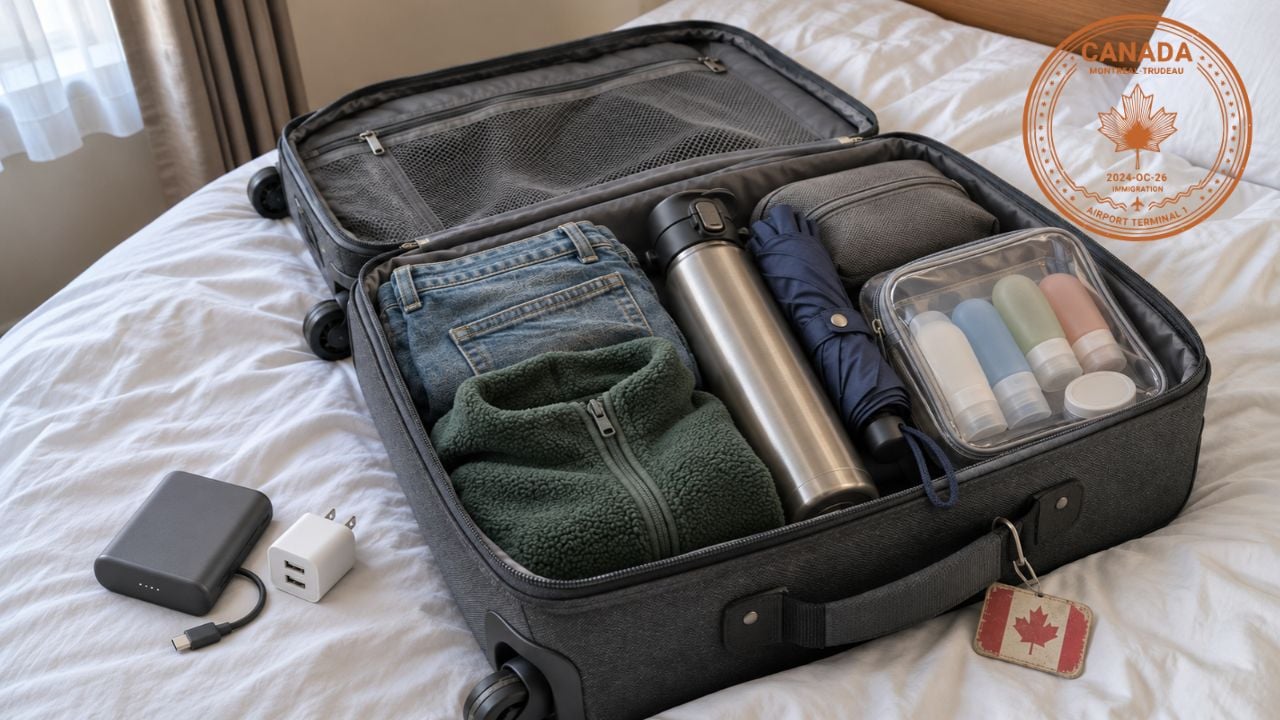
Deciding what to pack for Canada is an important aspect of the planning process. Start with comfortable walking shoes, versatile clothing, warm clothing and weather-appropriate layers, travel documents, toiletries, medication, and charging essentials. Then customize your Canada packing list for your destinations and activities.
I’ve visited Canada in May and July, so my firsthand travel experience covers spring and summer. This guide also includes general planning advice for fall and winter.
Below, you’ll find seasonal checklists, packing tips, useful product options, and links to official travel guidance for your Canada trip.
This post may contain affiliate links. We may earn a small commission, at no cost to you, when you make a purchase through the links. Read our complete disclaimer here, and Amazon Affiliate disclosure here.
What to Pack for Canada: The Essential Checklist
Start with these essential items, then customize them for your trip.
| Category | What to pack |
|---|---|
| Documents | Passport or applicable travel document, required entry authorization, bookings, travel insurance details |
| Clothing | Everyday outfits, underwear, socks, sleepwear, layering pieces |
| Outerwear | Jacket suited to your forecast |
| Shoes | Comfortable walking shoes and activity-specific footwear |
| Toiletries | Toothbrush, toothpaste, deodorant, skincare, personal-care supplies |
| Health | Medication, glasses, contact-lens supplies, a first aid kit, medical essentials |
| Electronics | Mobile phone, charger, cables, optional portable charger |
| Everyday items | Daypack or day bag, reusable water bottle, sunglasses, laundry bag |
What to Pack for Canada: Travel Documents and Money
First, keep your important documents accessible and save secure offline copies.
Next, bring accommodation confirmations, travel insurance details, emergency contacts, your credit card, debit cards, other payment cards, and a backup payment method.
Use the Government of Canada’s visa and eTA checker to confirm entry requirements for your citizenship, travel method, and circumstances.
Clothing, Shoes, and Socks
First, choose tops and bottoms that can be combined into several outfits. Then add a suitable outer layer and comfortable shoes you have already tested. Also, bring enough pairs of socks for your laundry schedule.
For longer walks, consider Midweight with Cushion Hiking Socks.
A Daypack and Water Bottle
This Foldable, Lightweight Hiking Backpack keeps your phone and trail snacks within reach in shoulder-strap pockets. It also has multiple compartments, and reflective accents for visibility after dark.
This reusable, stainless steel bottle is a great option. You can sip through a built-in straw or tilt the bottle for a swig. It keeps drinks cold for up to 24 hours and has a carry loop that locks the lid to prevent leaks.
Before You Pack: Review Your Itinerary
Check Every Destination’s Forecast
First, review daytime temperatures, overnight lows, precipitation, and wind for each major stop, along with the time of year.
Also, check conditions at excursion locations and follow the activity provider’s instructions.
Confirm Luggage and Laundry Arrangements
First, review your airline’s baggage dimensions, weight limits, and fare allowance.
If you’re renting a car, check the trunk space, and if you’ll rely on public transportation, consider how easily you can carry or roll your bag.
Also, confirm laundry access before deciding how many outfits to bring.
This Digital Luggage Scale can help you check your packed bag’s weight before departure.
For organization, Compression Packing Cubes separate clothing and provide a compression feature.
What to Pack for Canada in Spring and Fall
My spring visit was in May, so for another May trip, I would start with layerable clothing and choose my outer layer based on the local forecast.
What to Pack for Canada: Layerable Clothing
Consider:
- Everyday tops.
- Long trousers or jeans.
- Light sweater or fleece jacket.
- Forecast-appropriate jacket.
- Comfortable walking shoes.
- Warm accessories when needed.
This Full Zip Fleece Jacket is a soft, lightweight layer for chilly days, with a cozy collar, a classic fit that’s easy to move in, and two zippered pockets to keep small essentials secure.
What to Pack for Canada: Rain Protection
This water-resistant jacket has a breathable lining that reflects body heat for warmth, and a moisture-repellent exterior that resists stains. It also has zippered hand pockets plus an interior security pocket for valuables.
For protection from the elements, consider this versatile travel umbrella, which shields you from sun and rain with a UV-protective, waterproof canopy, withstands strong winds, and folds down for easy packing.
April, May, September, and October Checks
| Month | Packing priority |
|---|---|
| April | Review current outerwear and footwear needs |
| May | Plan adjustable daytime and evening layers |
| September | Combine lighter clothing with warmer pieces |
| October | Check coat, footwear, and accessory requirements |
What to Pack for Canada in Summer
My summer visit was in July, so for another July itinerary, I would start with lightweight outfits and add items based on the forecast and planned activities.
Southern Ontario and Quebec can have hot, humid summers, while northern regions generally have shorter, cooler summer months.
What to Pack for Canada in Summer: Clothing Essentials
Consider:
- Lightweight tops.
- Shorts, skirts, dresses, or lightweight trousers.
- Comfortable shoes.
- Underwear and socks.
- Light sweater or fleece.
- Swimwear.
- Rain protection where needed.
Also, choose outfits that share footwear and accessories.
Sun Protection and Outdoor Accessories
Add sunglasses, a sun hat, sunscreen, and insect repellent based on your outdoor plans. Also, follow product-label instructions.
This lightweight, packable sun hat offers UPF 50 protection and an extra-wide brim for long days outdoors.
A Neck Gaiter is another necessary accessory that provides UPF 50 sun protection and can help you stay cool during outdoor activities.
Swimming and Water-Bottle Options
For planned swimming, consider a Lightweight Microfiber Travel Towel that dries faster than comparable cotton towels.
For water on the go, this Stainless Steel Water Filter Bottle keeps water cool all day and uses a carbon filter to remove harmful elements.
What to Pack for Canada in Winter
Cold weather packing depends on destination, outdoor exposure, and activities.
During a Canadian winter, coastal, interior, and northern climates differ substantially.
My visits were in spring and summer, so this section provides general planning guidance for the winter months.
What to Pack for Canada in Winter: Clothing and Accessories
Review whether you need these winter essentials:
- Suitable base layers, such as a merino wool base layer.
- Warm midlayers.
- Insulated outerwear or a winter coat.
- Appropriate legwear.
- Hat.
- Gloves or mittens.
- Neck covering.
- Suitable socks, such as wool socks, and winter boots.
Finally, try the full clothing system together to check comfort and movement.
What to Pack for Canada in Winter: Footwear and Excursions
First, consider weather protection, grip, walking distance, and fit with your intended socks.
For winter sports such as skiing, as well as aurora viewing and guided winter outings, confirm supplied equipment, rental sizes, and personal clothing requirements before departure.
What to Pack for Different Parts of Canada
Canada has distinct seasons, and its climate varies considerably.
For example, Southern Ontario and Quebec can experience hot, humid summers and cold winters.
Meanwhile, coastal British Columbia and northern regions have different seasonal patterns, so your exact route will shape your packing decisions.
Vancouver, Victoria, and Coastal British Columbia
Review rain protection, comfortable footwear, and layering needs. Victoria is on Vancouver Island, so check the forecast for each coastal stop. However, coastal conditions differ from much of inland Canada.
Banff, Jasper, and the Canadian Rockies
Check current local conditions and clothing requirements for each Rocky Mountains activity. Also, confirm specialist footwear and equipment with providers.
Toronto, Ottawa, Montreal, and Quebec City
Prioritize comfortable walking shoes and season-appropriate clothing. Note that, Southern Ontario and Quebec experience substantial summer-to-winter changes.
The Prairies
Check your dates, the forecast, and how much time you’ll be outdoors. Note that inland conditions in the Prairie provinces differ from the Pacific coast.
Atlantic Canada
Review your mix of city stays, coastal outings, and boat trips. Also, follow excursion clothing instructions.
Northern Canada
Confirm destination-specific requirements and operator-supplied equipment. Much of northern Canada experiences very cold winters and short, cool summers.
What to Pack in Your Carry-On for Canada
Journey Essentials
Before you fly, keep these travel essentials accessible in your carry-on bag: documents, medication, glasses, valuables, your mobile phone, charging equipment, accommodation details, and a basic change of clothing.
Toiletries and Liquids
For standard Canadian airport screening, carry-on liquids, aerosols, and gels must be in containers of 100 mL or less. They must all fit inside one clear, resealable one-liter bag per passenger. However, certain medications qualify for exemptions. Review CATSA’s screening instructions.
This reusable 18-piece leakproof travel toiletry set keeps your essentials neatly organized in your carry-on.
For general organization, this Lightweight Toiletry Kit has zippered compartments.
Power Banks and Chargers
This Compact Power Bank delivers super-fast charging and is compatible with several device types.
FYI: Power banks and spare lithium batteries belong in cabin baggage, with terminals protected. Review airline requirements and CATSA’s travel checklist.
This Innovative Two-Port Charger lets you plug two devices into the wall charger at once, or use the adjustable stand to charge your phone and earbuds together.
Medication, Plugs, and Connectivity
Prescription Medication
Before you travel, check quantity, packaging, documentation, storage, and controlled-medication requirements using Health Canada’s personal-use importation guidance.
Electrical Compatibility
Canada uses Type A and Type B outlets with 120 V, 60 Hz electricity (the same as the United States).
If you are visiting from elsewhere, this International Power Adapter Set comes with six interchangeable plugs for international trips and can power up to eight devices at once.
Mobile Connectivity
First, review roaming coverage, charges, and usage limits. Then save bookings, maps, and emergency contacts offline.
What to Pack for Canada: My May and July Perspective
For another May trip, I would prioritize layerable clothing, long trousers, comfortable shoes, and forecast-appropriate outerwear.
For July, however, I would start with lightweight outfits, sun protection, comfortable footwear, and a light layer.
Finally, for either season, I would review my route, activities, laundry access, and luggage allowance before finalizing quantities.
Frequently Asked Questions About What to Pack for Canada
What should I pack for one week in Canada?
Bring coordinated clothing, underwear, and socks for your laundry schedule, suitable shoes, weather protection, toiletries, medication, documents, and electronics.
Do I need waterproof shoes?
Consider expected precipitation, walking conditions, activities, and drying opportunities.
Can I travel with carry-on luggage only?
Check whether your wardrobe and equipment fit your airline’s allowance. Also, confirming laundry access can help reduce the amount of clothing you pack.
Do I need a winter coat in September or October?
Use your destination, forecast, activities, and outdoor exposure to determine how warm you need to dress.
Final Checklist: What to Pack for Canada
- ☐ Review destination forecasts.
- ☐ Confirm activity requirements.
- ☐ Check entry documents and medication guidance.
- ☐ Confirm baggage allowances.
- ☐ Organize carry-on toiletries and batteries.
- ☐ Check charging compatibility.
- ☐ Save bookings offline.
- ☐ Confirm laundry access.
- ☐ Remove unnecessary duplicates.
Build your Canada packing list around your itinerary, refine it using the forecast, and give every item a clear purpose.
Planning another trip? Next, read my guide on What to Pack for Kazakhstan, or see my Road Trip Packing List.
P.S. If you found this post helpful or want to save it for later, please pin it on Pinterest. Thank you!
What Type of Traveler Are You?
 Find your travel style with our free quiz. Made by Afrostylicity.

