Last updated on October 17th, 2026 at 06:16 pm
Wondering what to wear in Ireland? Well, Irish weather doesn’t follow rules, and your wardrobe needs to match that reality. I learned this the hard way, my first time in the Emerald Isle, when I watched the sky cycle through rain, sun, and cold winds in a single morning walk.
The truth is, knowing what to wear in Ireland is about building a flexible wardrobe that adapts to four seasons happening in one day. This guide breaks down exactly what to wear month by month.
This post may contain affiliate links. We may earn a small commission, at no cost to you, when you make a purchase through the links. Read our complete disclaimer here, and Amazon Affiliate disclosure here.
Understanding Ireland’s Weather Patterns Before You Pack
Ireland doesn’t have predictable weather, and that’s the first thing you need to accept.
The Gulf Stream keeps temperatures mild year-round, which sounds great until you realize that “mild” in Ireland means constant dampness, frequent drizzle, and cold winds that cut through cheap jackets like they are made of tissue paper.
Average Temperatures in Ireland
The average temperatures in the summer months hover around 60-65°F, while winter lows rarely drop below 40°F.
You won’t face extreme cold weather or blistering heat, but you will face humidity, wind, and rain that arrive without warning and leave just as quickly.
Rain in Ireland
Rain isn’t always heavy, but it’s almost always present. The Irish call it “soft rain” for a reason. It’s a persistent mist or light drizzle that soaks you slowly rather than drenching you all at once.
You need a waterproof jacket that handles moisture for hours, not just heavy downpours.
Wind in Ireland
Wind is a bigger enemy than rain. Coastal areas and open countryside get hit with strong, sustained winds that make 55°F feel like 45°F.
If your waterproof jacket doesn’t block wind, you’ll be cold even when the thermometer says you shouldn’t be.
Sunshine in Ireland
Sun breaks happen fast and without warning. You’ll be layered up against the rain, then suddenly roasting on one of those rare sunny days.
So, your outfit needs to come apart quickly so you’re not sweating through a turtleneck in unexpected sunshine.
Humidity in Ireland
Humidity never really leaves. Even on dry days, moisture hangs in the air.
Cotton takes forever to dry, and anything damp against your skin will make you miserable.
Synthetic blends and merino wool become your best friends because they wick moisture and dry faster than natural fibers like cotton or linen.
The Foundation Layer Strategy for What to Wear in Ireland
1. Base Layers
Your base layers are doing more work than any other piece in your Ireland wardrobe, so getting them right matters more than your outerwear choice.
Base layers sit against your skin, which means they are responsible for moisture management, temperature regulation, and comfort during long days of walking, hiking, or exploring cities in damp conditions.
Cotton feels soft and familiar, but it absorbs moisture and clings to your body, leaving you cold and clammy within an hour of light activity or in drizzle.
You need fabrics that move moisture away from your skin and dry quickly when conditions shift.
These are the base layer materials that perform in Irish conditions:
Merino wool tops and bottoms.
Merino wool tops regulate temperature naturally, wick sweat, and resist odor even after multiple wears.
A complete merino wool base layer set, including both top and bottoms, is a great investment for your Ireland vacation.
Synthetic moisture-wicking shirts.
Polyester and nylon blends dry faster than merino wool and cost less, making them solid backups if merino is outside your budget.
Look for long-sleeved shirts marketed for hiking or running since they are designed to handle moisture and movement.
Fabrics to Avoid
Avoid cotton tees and traditional long underwear.
Cotton traps moisture, takes hours to dry, and loses insulation value when wet.
Traditional cotton long underwear does the same thing but worse because it’s thicker and holds even more water. Save cotton for wearing around your accommodation, not when you are out and about.
Fabrics to Prioritize
For bottoms, pack lightweight merino wool or synthetic leggings if you’re planning outdoor activities in cooler months.
Otherwise, quick-dry travel pants or long pants work fine as long as you’ve got a waterproof outer layer to keep them dry.
The key is making sure whatever touches your skin can handle moisture and dry before your next outing.
Tip: If you’re spending money anywhere in figuring out what to wear in Ireland, spend it on quality base layers.
2. Mid-Layers
Mid layers are your adjustable insulation, and in Ireland, you’ll be adding and removing them constantly as conditions change.
The goal here is for it to keep you warm, to be breathable when you are active, and to dry quickly if it gets damp.
Fleece jacket or lightweight down jackets.
A thin fleece jacket, a quarter-zip, or a packable down jacket gives you warmth without bulk.
Fleece breathes better and dries faster, making it ideal for active days and outdoor activities.
Down compresses smaller and provides more warmth per ounce, but it loses insulation when wet, so you need a good outer shell to protect it.
Tip: Bring either a fleece or a down jacket, not both, unless you’re traveling in deep winter.
Merino wool cardigans or sweaters.
These work well for casual city days or pub evenings when you want to look put together without sacrificing warmth.
Merino wool cardigans layer easily under a rain jacket, without looking bulky.
Avoid cotton hoodies and sweatshirts.
They are heavy, slow to dry, and take up too much room in your bag.
If you want a hoodie for comfort, get one made from synthetic or merino wool blends designed for outdoor use.
Tip: The best mid-layer setup for most trips to Ireland is one fleece or down jacket plus one merino wool sweater. That combination covers cool mornings, windy days, and chilly evenings without forcing you to overpack.
3. Outer Layer
Your outer layer is the only thing standing between you and the frequent Irish drizzle. So, this is where you need to be picky about performance when planning what to wear.
A true waterproof jacket is non-negotiable. Not water-resistant. Not a windbreaker that “handles light rain.” You need a waterproof jacket with sealed seams and a waterproof membrane, such as Gore-Tex or an equivalent.
Here’s what your outer layer needs to do:
a. Block wind completely.
Windproof construction is just as important as waterproofing in Ireland. Wind chill makes 55°F feel like 40°F, especially on coastal cliffs or in the open countryside.
b. Breathe enough to prevent internal condensation.
If your rain jacket traps all your body heat and moisture inside, you’ll end up soaked from sweat instead of rain.
Look for jackets with pit zips or breathable membranes that let vapor escape while keeping rain out.
c. Fit over your mid layers without restricting movement.
You need room to layer a fleece jacket or sweater underneath without feeling like a stuffed sausage.
Try your waterproof jacket on over your thickest mid-layer before you leave to make sure it fits comfortably.
d. Pack small enough to carry when you’re not wearing it.
Irish weather changes fast. Your rain jacket needs to fit in your daypack so you’re not carrying it in your hands or tying it around your waist for hours.
For most travelers planning what to wear in Ireland, a lightweight packable rain jacket with a hood is the best choice.
Tip: Make sure the jacket is actually waterproof and not just marketed as “rain-ready” or “weather-resistant,” which usually means it’ll soak through in anything more than a 10-minute drizzle.
Footwear That Handles Wet Streets, Trails, and Pub Floors
You need comfortable shoes that grip wet surfaces, dry relatively quickly, and support your feet through long days of walking on uneven terrain.
Waterproof boots or trail shoes.
If you’re planning any countryside hikes, coastal cliff walks, or rural exploring during your Ireland vacation, waterproof boots are the smartest choice.
Look for boots with Gore-Tex or similar waterproof membranes, good ankle support, and good tread for muddy or slippery trails.
Tip: Break them in before your trip so you’re not dealing with blisters.
Waterproof shoes or trail runners.
For lighter activities or city-focused trips, waterproof shoes or trail runners offer flexibility without the bulk of hiking boots.
Brands like Merrell, Salomon, and Columbia make solid options that handle wet pavement and light trails.
Rain boots for extreme wet conditions.
If you’re visiting during the wettest months or planning extensive outdoor activities, rain boots provide complete waterproof protection.
They are especially useful for muddy trails and farm visits where regular waterproof shoes might not be enough.
Casual waterproof shoes for pubs and restaurants.
You’ll want something that transitions from daytime exploring to evening dining without looking like you just walked off a mountain.
Waterproof leather boots, ankle boots, or casual slip-on shoes with water-resistant treatment work well here.
They don’t need to be hardcore hiking gear, but they should handle damp streets and dry quickly if they get soaked.
Skip the canvas sneakers and ballet flats.
Canvas soaks through immediately and takes forever to dry.
Ballet flats offer zero support, no traction on wet surfaces, and will leave your feet aching after a full day of walking.
If you want casual shoes, go for leather or synthetic materials that repel water.
What to Wear in Ireland in January
January brings cold weather with average temperatures around 40-45°F and short daylight hours across Ireland.
Snow is rare, but cold rain and wind make it feel colder than average temperatures suggest.
Tip: The weather in January means you’ll need layers to stay comfortable.
Pack your warmest waterproof jacket, a thick winter coat for extra insulation in particularly cold winds, insulated midlayers, including a warm fleece jacket, merino wool long-sleeve base layers, waterproof boots with excellent tread, warm gloves, and a warm hat.
What to Wear in Ireland in February
February conditions mirror January with average temperatures between 40-48°F and continued damp, cold weather.
February can bring some of the coldest winds of the year, so don’t skimp on insulation.
Your Ireland outfits should include a waterproof jacket as your outer layer, warm layers like a fleece or down jacket, merino wool base layers, long pants, waterproof boots, and cold-weather accessories such as gloves and a warm hat.
Tip: Check the weather forecast before heading out each day, as conditions can shift rapidly.
What to Wear in Ireland in March
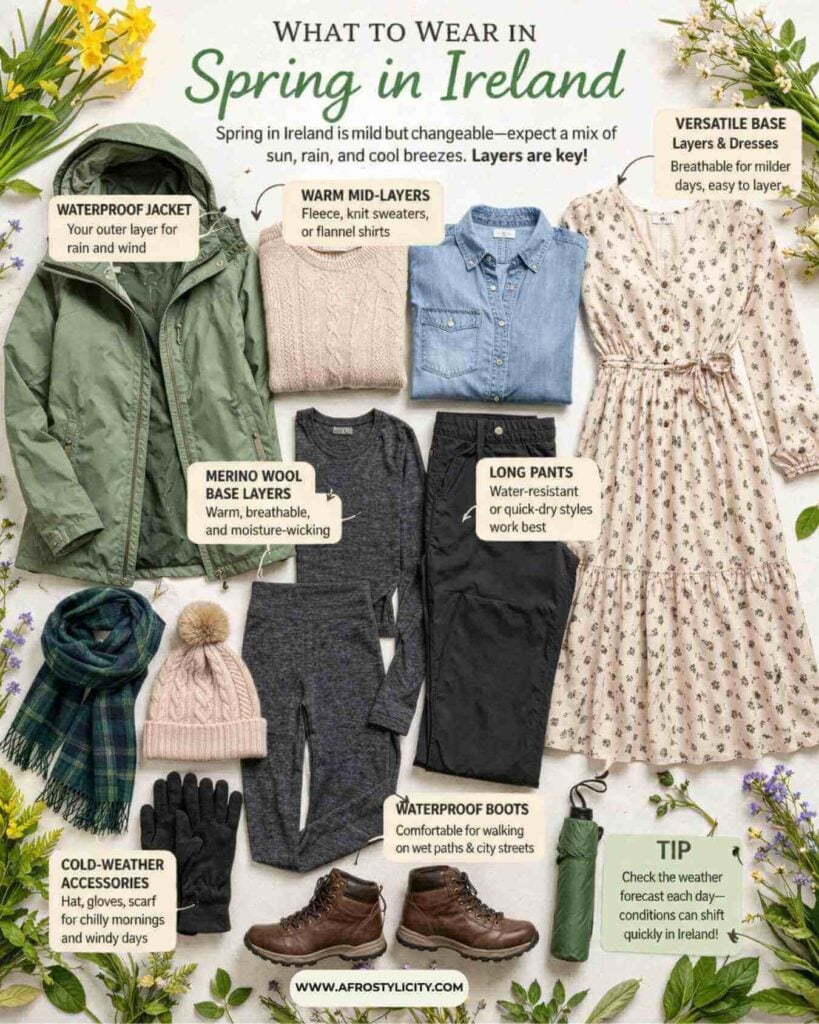
March marks early spring with average temperatures ranging from 42-50°F, though cold winds remain common.
You will need a waterproof jacket, a medium-weight fleece jacket, merino wool or synthetic base layers with long sleeves, long pants or quick-dry travel pants, waterproof shoes, and a warm hat for windy days.
You’ll start seeing longer daylight hours and occasional sunny days, but the unpredictable weather means you’ll still need several layers.
March can feel like winter one day and mild weather the next, so versatility is key.
What to Wear in Ireland in April
April brings mild temperatures between 45-55°F with frequent rain showers and improving conditions.
Pack a waterproof jacket, a lightweight fleece jacket as a midlayer, moisture-wicking long-sleeved shirts or tees, long pants, waterproof shoes or ankle boots, and lightweight accessories.
The weather remains unpredictable, but average highs climb enough that you can reduce the number of warm layers compared to winter. Still keep a warm jacket handy for early mornings and evenings.
What to Wear in Ireland in May
May has mild weather, with average temperatures between 48 and 58°F. This time of year brings longer daylight and more stable conditions, though rain remains a regular visitor.
Your Ireland outfits should include a rain jacket, one fleece jacket or light sweater for cooler moments, base layers with both short and long sleeves, comfortable waterproof shoes, long pants, or even shorts for particularly warm days.
What to Wear in Ireland in June
June begins the summer months with average temperatures between 52 and 62°F and the longest daylight hours.
Don’t let summer fool you into packing only summer clothes. Irish summers remain cool by most standards, and rain is still frequent.
The weather forecast often shows mixed conditions, so maintaining your layering strategy is essential even in the summer months.
Pack a lightweight rain jacket, a fleece jacket or sweater for mornings and evenings, moisture-wicking tees, long-sleeved shirts, long pants, possibly shorts, and waterproof shoes comfortable for all-day wear.
What to Wear in Ireland in July
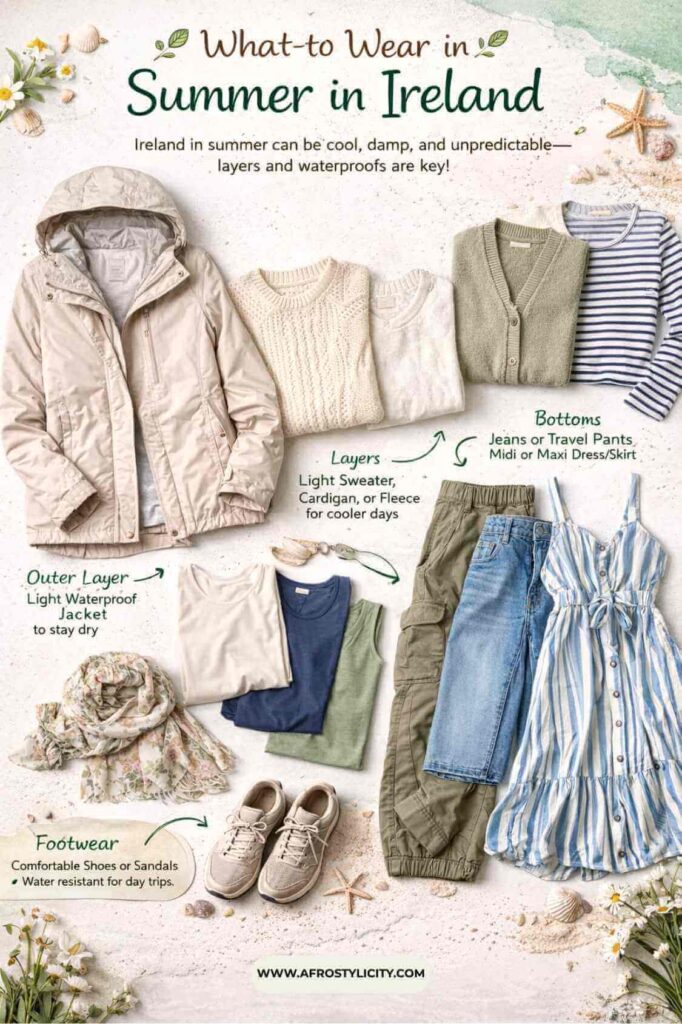
July typically brings the warmest weather with average temperatures around 55-65°F and frequent sunny days mixed with rain.
However, even on warm days, you will need to keep extra layers accessible in case temperatures drop or the wind picks up.
What to wear in Ireland during July includes a packable rain jacket, a light fleece jacket for cool evenings, moisture-wicking tees, long-sleeved shirts for sun protection or cooler moments, cargo pants for outdoor activities, waterproof shoes, and a sun hat for warm days.
What to Wear in Ireland in August
August continues summer conditions with average temperatures from 55-65°F, though rain frequency increases toward the month’s end.
Your Ireland vacation wardrobe for August should include a rain jacket, a light fleece jacket, base layers with short sleeves and long sleeves, long pants and shorts, comfortable shoes with waterproof protection, and sun protection items.
August marks the tail end of the summer months and begins to transition toward early fall conditions. You’ll still enjoy relatively warm days and long daylight, but the unpredictable weather becomes more pronounced as September approaches.
What to Wear in Ireland in September
September brings early-fall temperatures between 52 and 60°F, with increasing rainfall and shorter days.
The weather shifts noticeably from summer, so adjust your Ireland outfits to include more warm layers than you would have needed in July or August.
Pack a waterproof jacket, a medium-weight fleece jacket, merino wool base layers (including long sleeves), long pants, waterproof boots or waterproof shoes, and a light hat for windy days.
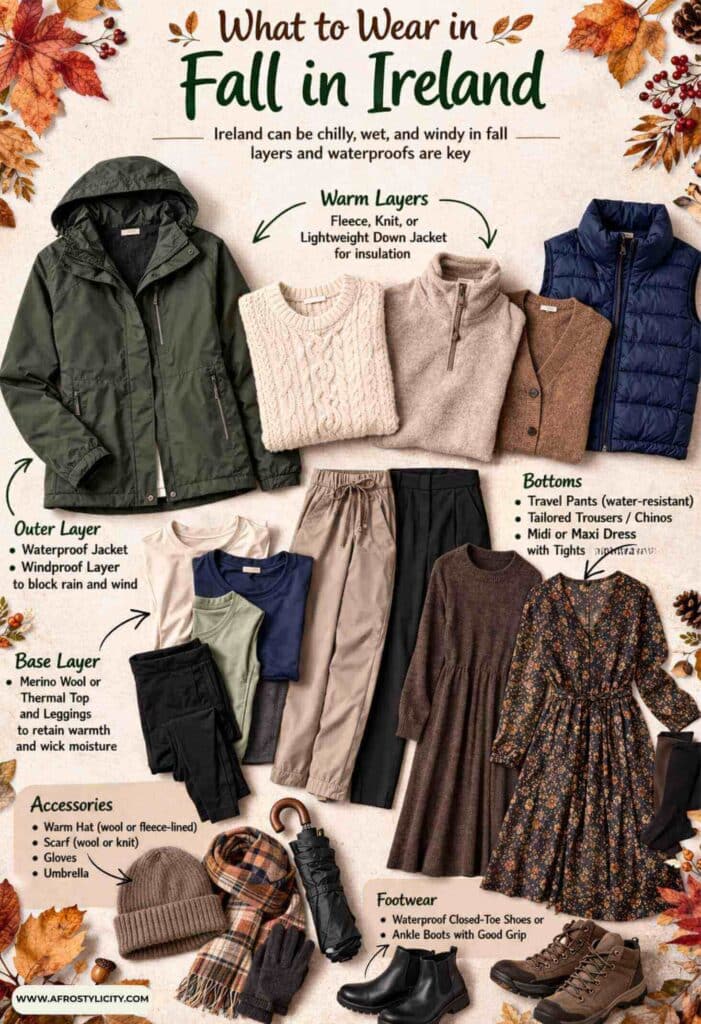
What to Wear in Ireland in October
October sees temperatures drop to 48-56°F with heavy rain and cold winds as winter approaches.
Your outer layer needs to provide serious wind protection, and having multiple layers becomes essential.
You will need a warm, waterproof jacket; a warm fleece jacket or down jacket; merino wool base layers; long pants; waterproof boots with good traction; and warm accessories, including gloves and a hat.
Tip: Check the weather forecast daily, as conditions vary significantly from morning to evening.
What to Wear in Ireland in November
November brings cold weather, with average temperatures between 44 and 50°F, short daylight hours, and frequent storms.
November conditions often feel harsher than the temperature suggests due to wind and dampness. Therefore, your Ireland outfits need to prioritize warmth and weather protection.
Pack your warmest waterproof jacket or a thick winter coat, an insulated fleece jacket, merino wool long-sleeve base layers, long pants, waterproof boots, warm gloves, and a warm hat.
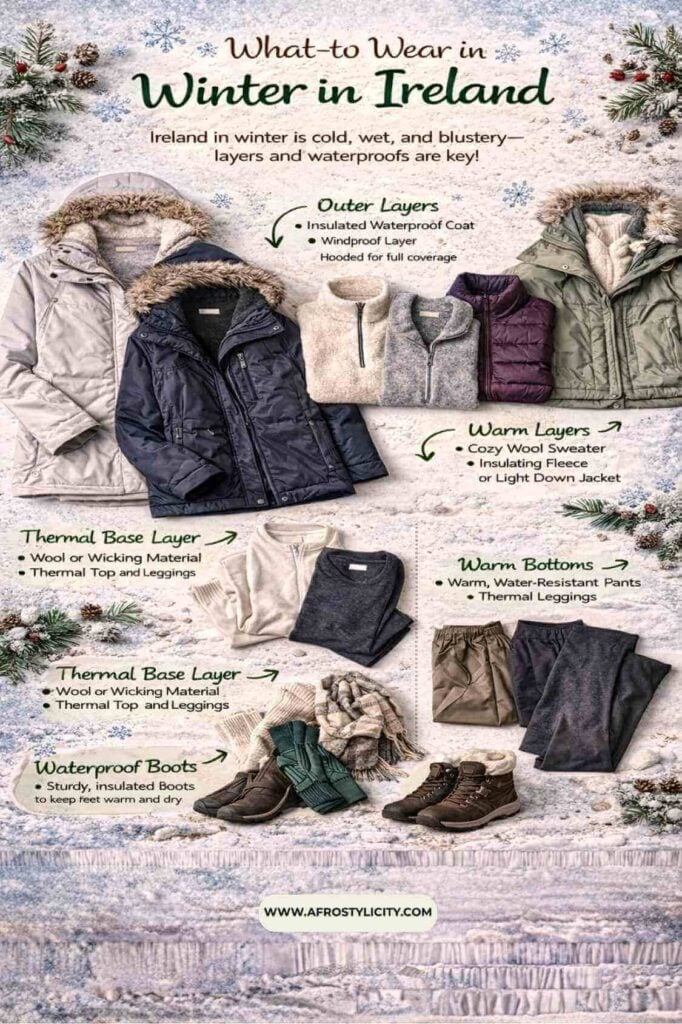
What to Wear in Ireland in December
December sees the shortest days and coldest conditions with temperatures around 40-48°F and persistent dampness.
You will need to pack plenty of layers and prioritize waterproof protection.
Your Ireland vacation wardrobe for December should include a thick winter coat, multiple warm layers, including a quality fleece jacket, merino wool base layers, insulated long pants, insulated waterproof boots, heavy gloves, and a warm hat.
Regional Considerations for What to Wear in Ireland
Different parts of Ireland experience varying conditions depending on location and time of year.
What to Wear in Ireland’s Coastal Areas
Coastal areas like the Cliffs of Moher, the Wild Atlantic Way, and the Dingle Peninsula face stronger winds and more rain than inland cities.
When planning what to wear in Ireland’s coastal regions, add extra wind protection and warmer layers regardless of the season.
What to Wear in Ireland’s Cities
Cities like Dublin, Cork, and Galway offer slightly more shelter but still require full rain gear and layering options.
What to Wear in Ireland’s Rural and Mountain Regions
Rural areas and mountain regions can be significantly colder and wetter than urban centers, especially during outdoor activities like hiking.
Regional Tips for What to Wear
The West Coast generally receives more rainfall than the East Coast, and northern regions tend to be cooler than southern regions. However, Irish weather is unpredictable enough that these patterns shouldn’t dramatically change your packing strategy.
Focus on versatile pieces that work everywhere rather than trying to optimize for specific microclimates.
What to Wear in Ireland: Essential Accessories
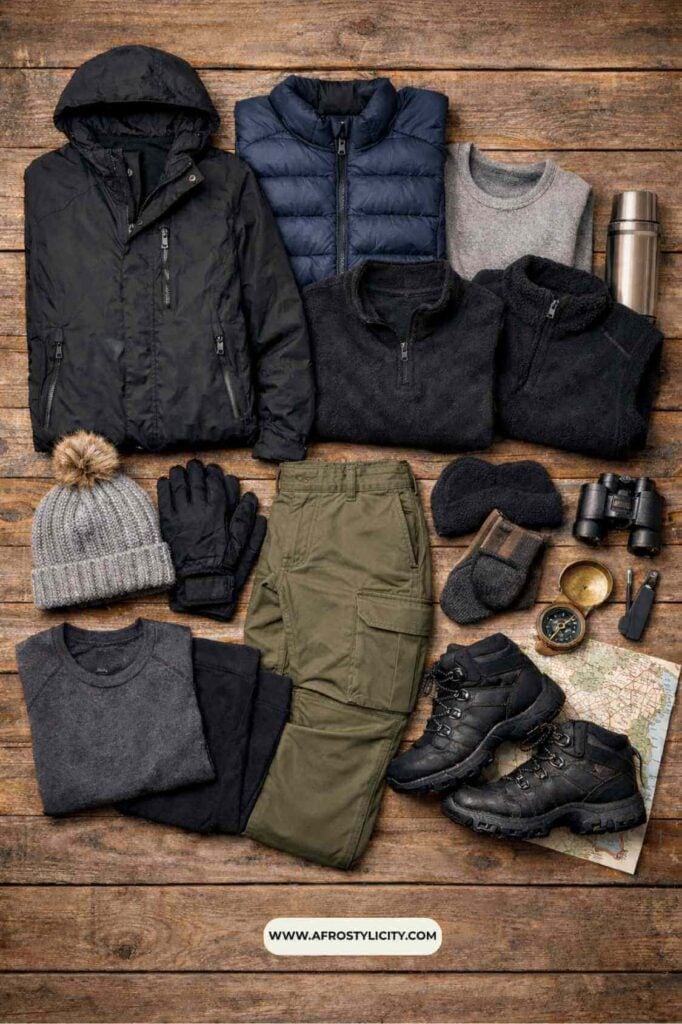
Small accessories solve specific problems that clothing alone can’t address in Irish weather.
Waterproof daypack or dry bag.
A waterproof daypack keeps your phone, wallet, camera, and extra layers dry while you’re out exploring.
Dry bags work great for organizing items inside a regular backpack, too.
Merino wool socks.
Your feet will thank you. Merino wool socks wick moisture, resist odor, and stay comfortable even when damp.
Bring three or four pairs so you can rotate them throughout your trip. Skip cotton socks entirely.
Lightweight gloves and a warm hat.
Even during the summer months, early mornings and windy coastal areas can be cold.
Packable gloves and a warm hat take up almost no space in your carry-on luggage and make a huge difference when temperatures drop or cold winds pick up.
Neck gaiter.
A lightweight neck gaiter protects your neck from wind, works as a headband, and adds an extra layer of warmth without bulk.
For colder months, consider the merino wool version for extra warmth.
Sunglasses.
When the sun breaks through Irish clouds during sunny days, it’s bright and direct. UV protection sunglasses protect your eyes during sudden sunny spells.
Prepare For Your Visit to Ireland
Now that you know exactly what you need to wear while in Ireland, check out our Ireland Travel Outfits and Things To Know Before Visiting Ireland for the First Time travel guides.
Final Thoughts About What To Wear in Ireland
Knowing what to wear in Ireland is about choosing versatile, high-performance pieces that handle moisture, layer effectively, and adapt to frequently shifting weather.
Get your base layers right with merino wool, invest in a solid waterproof jacket, bring comfortable shoes that can handle wet conditions with waterproof protection, pack several layers for temperature changes, and skip anything cotton or delicate. This approach to planning your outfits ensures you’re prepared.
So, when you land in Ireland and watch the weather cycle through rain, wind, and sun in a single afternoon, you’ll be completely unbothered and ready to enjoy everything the Emerald Isle offers without constantly worrying about being soaked, cold, or uncomfortable.
Happy Travels!
For more insights into travel, subscribe to our email list. Also, follow us on Instagram and Facebook for real-time updates on destinations and tips for making your travels truly exceptional.
P.S. If you found this post helpful or want to save it for later, please pin it on Pinterest. Thank you!