Last updated on August 12th, 2026 at 11:09 pm
My visit to the island of Ireland was a bucket list plan long in the making. The experience was one of the best things I’ve ever gifted myself, and it was worth every millisecond spent researching, planning, and anticipating beforehand. If a trip to the Emerald Isle is on your must-do list, too, then these Ireland travel tips have you covered.
This post may contain affiliate links. We may earn a small commission, at no cost to you, when you make a purchase through the links. Read our complete disclaimer here, and Amazon Affiliate disclosure here.
Ireland Travel Tips for Planning Your Itinerary
1. Visualize your trip to Ireland on a map.
Divide Ireland into regions to organize your travel plan(e.g., Southwest, West, East). This way, you can map your route and calculate realistic distances and times to plan your schedule.
Check out our Things to Know Before Visiting Ireland for the First Time guide to help map your route.
2. Prioritize must-see places based on your interests.
Ireland is full of amazing sights and activities. Group attractions by location to plan the most efficient route.

3. Create a flexible schedule.
Allow buffer days for weather or unexpected schedule changes.
Build rest days into longer itineraries, especially after intensive sightseeing periods.
4. Do not add too much to your itinerary.
Resist the urge to pack too many destinations into a limited time.
Trying to see too much in a short time means spending more time traveling than enjoying Ireland. Focus on a few places and take your time.
5. Balance famous attractions with local recommendations.
Tourist attractions provide important context and memorable experiences, but don’t let them completely dominate your itinerary.
Ask accommodation hosts, restaurant servers, and shop owners about their favorite local spots. These suggestions often lead to the most authentic and memorable experiences.
6. Prepare for your airport arrival and departure.
Always arrive at the airport at least 3 hours before your departure time (at least 4 hours on heavy travel days, such as holidays).
This will give you enough time to handle check-in, security, US preclearance, etc.
7. Plan for connectivity.
WiFi is widely available in hotels, bed-and-breakfasts (B&Bs), restaurants, and cafes, usually free of charge. However, speeds can be slow in rural areas, and connection quality varies.
Don’t expect to stream video reliably everywhere. Have a contingency plan for poor or no wifi.
I had an Airalo eSIM that I used for phone and data coverage.
Ireland Travel Tips for Getting There and Around
8. Book tickets early.
Book flights early, ideally 2-3 months ahead. Also, book train, bus, or ferry tickets in advance.
9. Only use official taxi services.
If you plan to take a taxi, e.g., from Dublin airport to your hotel, or to another destination, only use official taxis. Unofficial cab drivers may overcharge you.
Tip: You can prebook taxis for fixed rates.
10. Rent a car for maximum freedom.
Public transport is limited outside major cities; therefore, renting a car to drive yourself may be the best option for exploring on your own terms.
Book your rental car early, especially during peak season, as availability may be limited.
FYI: Most rental companies have more manual transmission cars. Specify automatic when booking if you’re not comfortable with a stick shift.
11. Exercise caution when driving on narrow Irish roads.
Irish roads outside major cities are often narrow, winding, and lack shoulders.
Single-track country roads with passing places are common in rural areas.
Stone walls and hedgerows may be inches from the pavement, and you may also encounter sheep and other farm animals along country roads.
These factors make cautious driving essential.
12. Drive on the left side of the road.
In Ireland, you’ll drive on the left side of the road with the steering wheel on the right side of the vehicle.
If you are traveling from a region where this is not the norm, take time to adjust.
13. Adhere to traffic laws.
Familiarize yourself with Irish traffic laws, e.g., the speed limit and road signs.
14. Purchase comprehensive car insurance.
Comprehensive car insurance is a must-have if you plan to drive in Ireland. Minor scrapes are common on tight country roads. You don’t want to be on the hook for car repair costs.
13. Download essential information before driving.
Data coverage may be limited in some areas. Therefore, download essential information, Google Maps offline, and entertainment before arriving in remote areas.
14. Do not underestimate travel times.
It may take longer to drive on Irish roads, as they are often narrower and windier than expected, particularly in rural areas and along scenic coastal routes.
Also, factor in extra time for photo stops, spontaneous pub visits, and inevitable wrong turns on rural roads.
Ireland Travel Tips for Accommodation
15. Reserve accommodations early.
Accommodation options like hotels fill up quickly, especially during peak season and festivals.
Tip: Some accommodations allow you to book now and pay later.
If you prefer a unique accommodation option, consider staying at an iconic Irish castle hotel.

16. Book Bed and Breakfasts (B&Bs) directly.
Bed and Breakfast rates are often lower when you book directly, as opposed to using third-party booking sites. Plus, you can negotiate longer stays.
Ireland Travel Tips: Money Matters
17. Set a realistic budget.
Planning a trip to Ireland starts with understanding the costs involved, including airfare, accommodations, meals, transportation, and activities.
Set a budget that allows for comfort while leaving room for unexpected expenses.
Consider researching average flight and lodging prices based on your travel season and preferences.
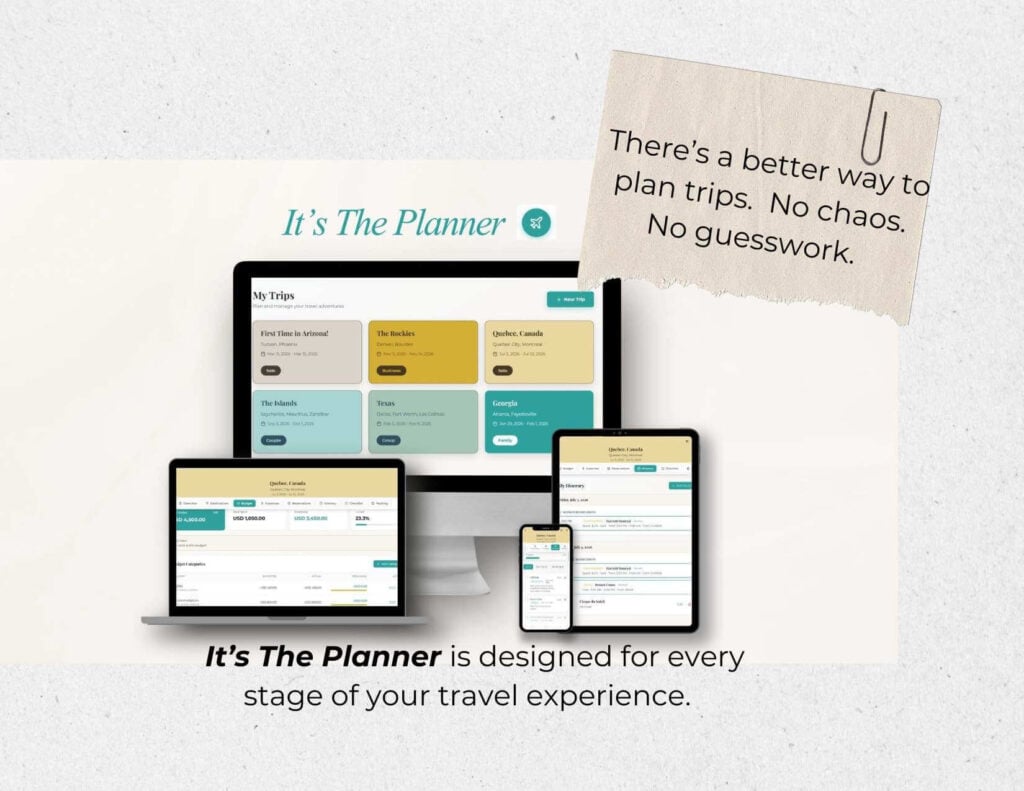
Tip: Use our It’s The Planner app to set and keep track of your travel budget.
18. Travel during the shoulder season.
Travel during shoulder seasons for significant savings on accommodation and transportation.
19. Factor in all the costs associated with renting a car.
Driving may be the best option for you while in Ireland; however, getting a car rental can be expensive.
It’s important to factor in all the associated costs when deciding whether to rent a car. Some roads have tolls, and petrol (gas) prices are also relatively high, so factor this into your budget.
20. Book tours and attraction tickets in advance online.
You will unlock online discounts when you book your tickets online. This is further amplified by activating cashback browser extensions like Rakuten when purchasing your tickets.
21. Take advantage of free activities.
You can have a great time engaging in free activities like hiking trails, beaches, historic town walks, and traditional music sessions without denting your travel budget.
Many museums also have free admission days or suggested donation policies.
22. Consider rail or bus passes for unlimited travel.
Purchase the Irish Rail’s Irish Explorer Pass (€128 for five days) or the Trekker Four Day (€88 for four days) for unlimited travel.
For bus travel, purchase the Leap Visitor Card, which offers 1, 3, or 7 days of unlimited travel on Dublin Bus, Luas, DART, and commuter rail in the Short Hop Zone.
23. Dine in Irish pubs and markets to cut costs.
Dining in local pubs and markets rather than tourist hot spots is a great way to experience authentic flavors and better prices.
Note that pub food is hearty and made to order, so expect longer waits and embrace the relaxed pace.
24. Have some cash in hand.
You can use a debit or credit card for purchases in most places, but carry some cash (Euros) for small vendors, especially in rural areas.
25. Keep receipts for VAT refunds.
You can get tax back on purchases over €75. You will need to have your passport with you when shopping and request a VAT refund form (export voucher) at checkout.
Present VAT refund forms at airport/ferry customs for stamping, then process refunds via agents like Global Blue (cash, card, or mail).
26. Take advantage of lunch specials to save money.
Many Irish restaurants, cafes, and pubs feature lunch menus (typically 12-3 PM) at 40-60% less than dinner equivalents, like €15-20 vs. €30+ for similar dishes.
Also, if you are staying at a bed-and-breakfast (B&B) in Ireland, the nightly rate includes a full Irish breakfast.
27. Inspect your receipts.
Check bills for a 10-15% service charge on groups. Tip extra only for exceptionally good service at pubs or restaurants.
28. Get the Heritage Card for museum discounts.
Ireland’s Heritage Card provides unlimited entry to over 80 state-managed historical sites operated by the Office of Public Works (OPW), including castles, abbeys, national parks, and monuments.
Adult cards cost €40 for one year from first use, with discounts for seniors (€30), students/children (€10), and families (€90 for 2 adults + up to 5 kids).
Tip: The Heritage Card pays off quickly if you visit 8+ sites, since individual entries start at €5 each.
29. Save money with free walking tours.
Free walking tours are widely available across Ireland, especially in major cities such as Dublin, Cork, and Galway.
These tip-based day tours offer engaging introductions to local history, landmarks, and hidden gems, making them ideal for budget-conscious travelers.
Book free walking tours via Guru Walk.
30. Avoid tourist traps.
Tourist-centric experiences may be significantly more expensive. Ask locals for recommendations for where to eat, things to do, and hidden gems.
Ireland Travel Tips for Weather Unpredictability
31. Pack layers and waterproof gear.
Ireland’s weather changes quickly. Bring waterproof layers and sturdy shoes, even in the summer months.
Check out our Ireland Packing List and What to Wear in Ireland travel guides for details.

32. Consider the weather when crafting your itinerary.
Design your Ireland itinerary to include a mix of outdoor sights and indoor experiences, allowing you to adjust plans based on daily weather conditions.
Ireland Travel Tips for Cultural Insights and Etiquette
33. Respect the queue.
Queuing (standing in line) is taken seriously. Always join the back of the queue and wait for your turn. Cutting in line is considered extremely rude.
34. Embrace the ‘craic’ and pub culture.
Craic (pronounced crack) means good times and conversation in Irish slang. To that end, pubs are not just drinking establishments; they are community gathering spaces for conversation, music, and connection.
Many pubs host traditional music sessions, poetry readings, sporting event viewings, and informal social gatherings.
35. Understand the “round” system.
If drinking with locals, understand the “round” system. When someone buys a round, they purchase drinks for everyone in the group. You’re expected to buy a round in return when the glasses are empty. If you don’t plan to buy a round, politely decline joining one.
36. Honor Irish customs and traditions.
Understanding basic Irish social customs significantly enhances interactions with locals. Patience is valued over efficiency, so don’t appear rushed during conversations or transactions.
Respect for traditional Irish culture is appreciated, particularly in rural areas and Gaeltacht regions.
Avoid stereotypical references or other tourist clichés that can come across as patronizing to locals.
Religious sites remain active places of worship. Visit respectfully, dress appropriately, and maintain quiet behavior during religious services or ceremonies.
Show interest in the rich history, customs, and traditions, and keep noise levels down during traditional music sessions.
37. Learn a few Irish language phrases.
Greet locals using Irish language phrases such as “dia dhuit” (hello) or “sláinte” (cheers) to spark conversations.
Ireland Travel Tips for Health and Safety
38. Avoid driving immediately after a transatlantic flight.
Jet lag, left-side driving, and unfamiliar roads create dangerous conditions. It is a good idea to spend your first day or two in one location, adjusting to the time change before getting behind the wheel.
Also, avoid driving late at night on rural roads.
39. Stay up to date on local news or travel advisories.
Ireland is a pretty safe country; however, like with any destination, it is important to stay in the know about any potential safety concerns. Register travel plans with your embassy if applicable.
40. Exercise standard safety precautions.
It should be standard protocol to be aware of your surroundings, avoid isolated areas at night, and keep your belongings secure at all times.
41. Know emergency numbers.
The emergency numbers in Ireland are 112 and 999 for police, fire, and medical emergencies.
Ireland Travel Tips for Sustainability and Responsibility
42. Choose locally-owned accommodations.
A great place to start on the journey of responsible travel is with accommodation. When possible, choose locally owned accommodations, such as family-run bed-and-breakfasts (B&Bs), over international hotel chains.
These establishments provide more authentic experiences while keeping tourism revenue within local communities.
43. Dine at restaurants featuring local ingredients.
Many Irish restaurants now emphasize farm-to-table concepts, showcasing the country’s excellent agricultural products and supporting local farmers.
44. Purchase souvenirs and crafts directly from artisans.
Traditional crafts such as Aran sweaters, pottery, and jewelry represent genuine Irish heritage and provide a livelihood for skilled craftspeople who maintain traditional techniques.
- Aran sweaters last for decades and improve with age.
- Irish wool is superior. Donegal tweed and Connemara wool are world-renowned.
- Many artisans work in studios that you can visit.
- Saturday markets in towns offer artisanal foods and crafts.
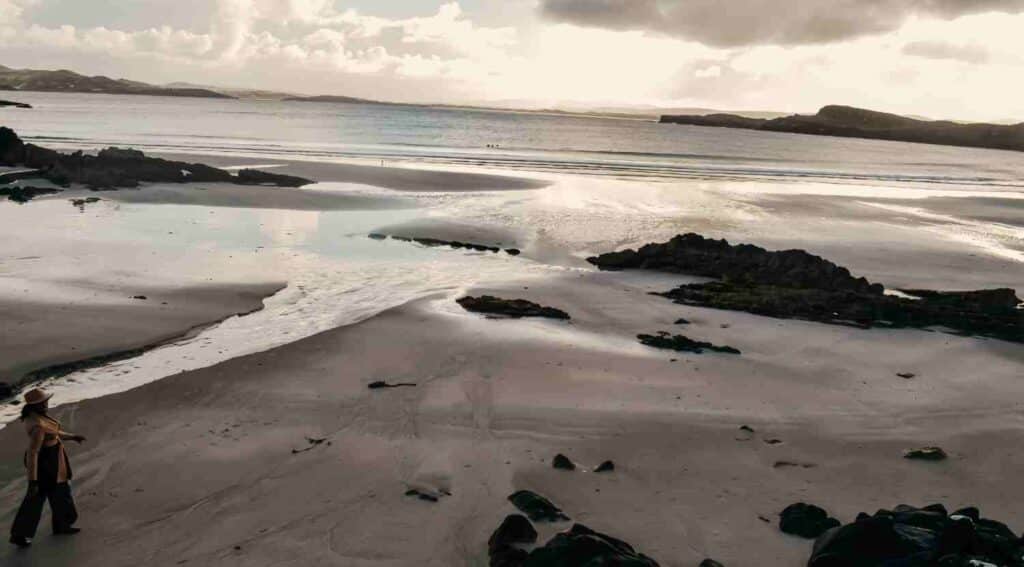
45. Help protect natural landscapes.
Ireland’s natural landscapes require protection against overtourism and environmental damage.
Stay on marked trails during hikes, carry out all trash, and respect wildlife viewing distances.
46. Reduce your carbon footprint.
Consider public transportation or organized tours for visiting popular attractions to reduce vehicle traffic and parking pressure on sensitive sites.
Respect nature and leave no trace when exploring the outdoors.
47. Respect cultural heritage sites.
Ancient sites throughout Ireland require careful preservation for future generations. Follow all posted guidelines at archaeological sites, avoid climbing on stone structures, and never remove artifacts or stones as souvenirs.
Photography restrictions at some indoor sites protect delicate manuscripts and artifacts that can be affected by flash photography. Respect these rules even when they seem overly strict.
Final Thoughts About Ireland Travel Tips
Based on my experience, one of the best tips I can give you about Ireland is this: extend your stay if you can.
It truly is a beautiful country, not just to explore but to appreciate awe-inspiring Mother Nature. Now I truly understand why it is on so many people’s bucket lists.
The tips in this guide will help you save time and money and ensure you are prepared to get your own share of the pot of gold at the end of the Irish rainbow. Ireland might just become one of your favorite places to visit, too!
I wish you the good luck of the Irish as you experience Ireland and create your own lifetime of memories.
Happy travels!
For more insights into travel, subscribe to our email list. Also, follow us on Instagram and Facebook for real-time updates on destinations and tips for making your travels truly exceptional.
P.S. If you found this post helpful or want to save it for later, please pin it on Pinterest. Thank you!